
Risk Indicators
- FATF/EU Blacklist/Greylist (Lower Concern)
- Terrorism Financing (Lower Concern)
- US Dept of State INCSR
- Proliferation Financing
- Corruption
- Criminality
- Resilience & Governance
- Financial Transparency
- Offshore Finance Centres
- Sanctions
Background
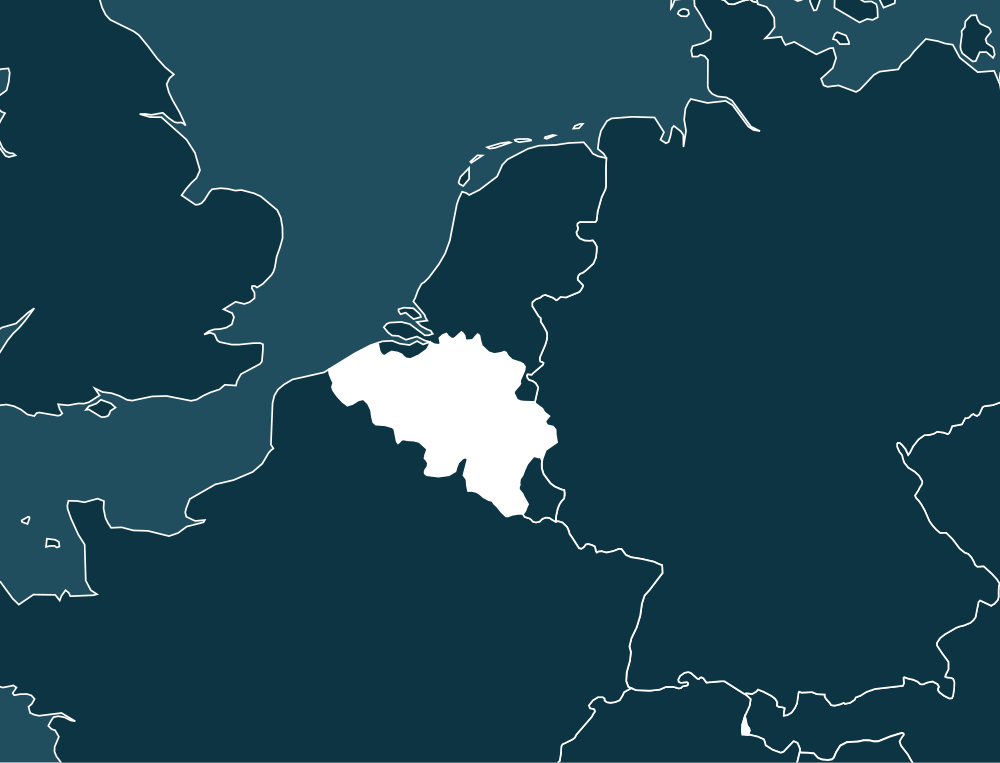
Belgium emerged as an independent state in 1830 and developed into a technologically advanced European democracy with a prominent role in NATO and the EU. Its internal structure reflects enduring linguistic and regional divisions between Flemish and Walloon communities, while Brussels hosts major international institutions. The country’s constitutional arrangements and strategic position offer important context for understanding its political and diplomatic profile.
Belgium’s immediate neighbors—France, Germany, the Netherlands, and Luxembourg—are stable and present no major armed-conflict or sanctions concerns. However, Belgium has taken a particularly active position on the conflict in eastern DRC, where Rwanda is accused of supporting M23 and facilitating illicit mineral flows. EU measures targeting Rwandan officials, M23 figures, and related companies have intensified diplomatic tensions, including Rwanda’s decision to sever ties with Belgium.
AML & Terrorist Financing
Belgium’s AML/CFT framework is broadly aligned with FATF standards and benefits from institutions such as CTIF-CFI, the FSMA, the National Bank of Belgium, and FPS Finance, yet effectiveness remains uneven. Major concerns include professional laundering networks linked to drug trafficking, fraud and corruption, vulnerabilities around Antwerp’s logistics hub, shell entities and cash-based offsetting, and the rapidly developing use of virtual assets. Resource constraints, limited sanctions and supervision in some sectors, gaps in beneficial-owner verification, and weaknesses in terrorist-financing sanctions, non-profit oversight, and proliferation-financing controls leave important questions about how well identified risks are being addressed.
Sanctions
Belgium enforces UN-transposed and autonomous EU measures, with particular focus on Russia and Belarus and secondary exposure involving Iran, North Korea, and Syria. Euroclear, the Port of Antwerp, NCTS Phase 5, and regional licensing authorities feature prominently in efforts to control frozen assets, dual-use goods, and evasion schemes. No international sanctions are currently in force against Belgium, although its financial and trading infrastructure remains exposed to legal and enforcement pressures.
Criminality
Belgium maintains extensive anti-bribery laws, with enforcement shared by investigating magistrates, the federal police, and the Central Service for Combating Corruption, though that specialized unit reportedly lacks sufficient staff. Corruption concerns have surfaced particularly around government procurement and public works, alongside significant exposure to trafficking, drug-related crime, money laundering, financial fraud, and cybercrime.
Reports
Belgium remains a significant European focus for cocaine trafficking, with Antwerp customs seizures, newly deployed mobile scanners, the National Drug Commissioner, and initiatives such as the European Ports Alliance highlighting efforts to secure maritime supply chains. The country fully meets anti-trafficking standards while facing victim-service and sentencing limitations, and its counterterrorism priorities increasingly center on homegrown lone actors and youth plotters amid ongoing international security commitments.
Industry/Product Sector Risk
Belgium’s AML/CFT risk landscape spans highly internationalised finance, cash-intensive businesses, digital payment channels and professional intermediaries, with particular exposure in retail banking, correspondent banking, trade finance, real estate and virtual currencies. The port of Antwerp-Bruges, diamond trading, online gambling and extensive cross-border flows feature prominently alongside concerns involving tax and social fraud, drug trafficking, cyber-enabled crime, corruption and organised criminal networks. Supervisory capacity and reporting effectiveness vary across sectors, with institutions such as the Gaming Commission and FSMA facing distinct challenges in keeping pace with complex structures, remote services and evolving typologies.
Economy & Investment Climate
Belgium remains an open, highly developed gateway to Europe, supported by the Port of Antwerp-Bruges, specialized infrastructure, a skilled workforce, and investment opportunities spanning chemicals, pharmaceuticals, environmental technologies, and health and information services. Growth eased to 1 percent in 2024 amid weaker industry and uncertain investment, while the National Bank of Belgium’s figures point to fiscal and labor-market pressures alongside strong financial-sector buffers and enduring U.S. trade ties.
Cryptocurrency Regulations
Belgium permits cryptocurrency activity but places it under close oversight from the Financial Services and Markets Authority (FSMA), with registration, AML/KYC controls, advertising restrictions, and evolving EU requirements shaping the market. Tax treatment can vary significantly by investor profile, while initiatives such as DAC8, CARF, the Travel Rule, and MiCA point to increasingly detailed scrutiny of transactions, token offerings, and disclosures.
Get full access
The information on this page is a brief summary. Get access to EDD country reports, all risk category scores and customisable weightings for 245 jurisdictions.