
Risk Indicators
- FATF/EU Blacklist/Greylist (Lower Concern)
- Terrorism Financing (Lower Concern)
- US Dept of State INCSR
- Proliferation Financing
- Corruption
- Criminality
- Resilience & Governance
- Financial Transparency
- Offshore Finance Centres
- Sanctions
Background
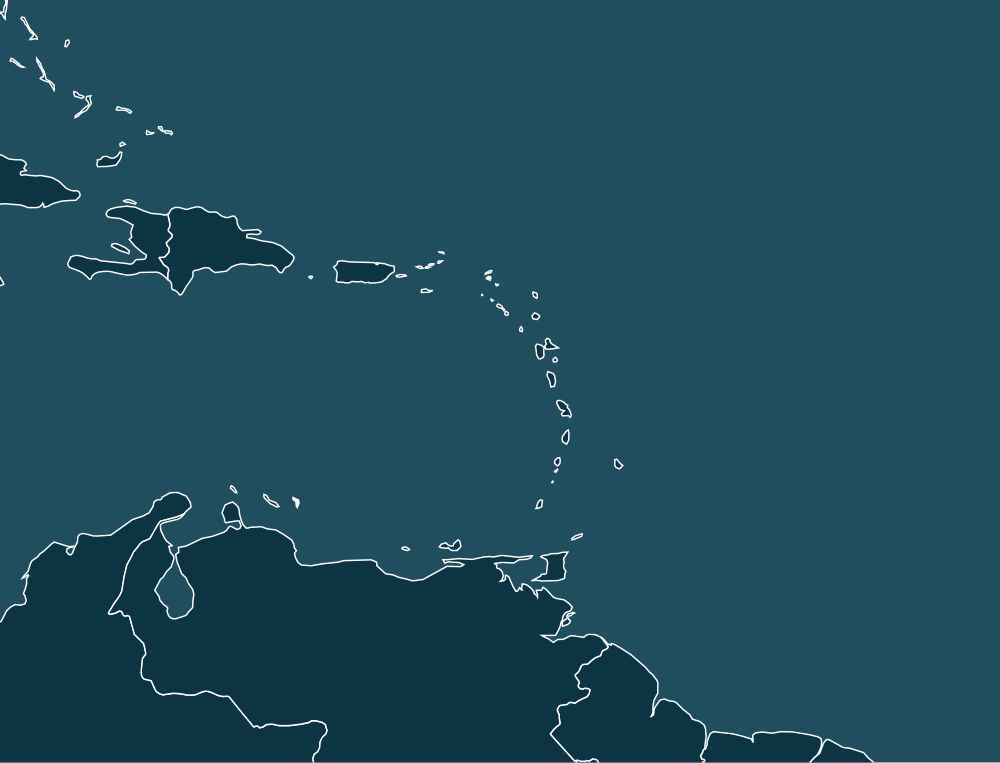
Since 2010, Bonaire, Sint Eustatius, and Saba have held the status of special municipalities within the Netherlands, following the dissolution of the former Netherlands Antilles. Their locations place Bonaire near Venezuela, Aruba, and Curaçao, while Sint Eustatius and Saba lie closer to Sint Maarten, Saint Kitts and Nevis, and Saint Barthélemy. This gives the islands a distinctive position within the Kingdom of the Netherlands and the wider Caribbean.
The surrounding region combines generally stable island communities with concerns involving organized crime, drug trafficking, financial restrictions, and the potential movement of sanctioned goods and funds. Venezuela’s political and humanitarian crisis, including repression and suspected oil-related sanction evasion, is the most acute nearby challenge, while neighboring jurisdictions have strengthened compliance with international measures. On Sint Eustatius, the island council was dissolved in 2018 and replaced by a government commissioner in an effort to restore public-administration integrity.
AML & Terrorist Financing
As special municipalities of the Netherlands, Bonaire, Sint Eustatius and Saba operate within a wider Dutch AML/CFT framework that has generally strong risk awareness and coordination, while the BES Islands retain distinct vulnerabilities and capacity challenges. Financial investigation expertise among local law enforcement agencies has improved and a specialised money-laundering prosecutor role exists, but complex cases still rely on support from continental Netherlands, with relatively few money-laundering investigations or convictions and no terrorist-financing cases identified to date. Important questions remain around supervision of targeted financial sanctions for designated non-financial businesses and professions and virtual asset service providers in the islands, alongside broader regional cooperation involving FIU-NL and the Regional Information and Expertise Centre Caribbean Netherlands.
Sanctions
As special municipalities of the Netherlands, Bonaire, Sint Eustatius and Saba fall under a framework implementing UN and EU measures, including asset freezes, travel bans, sectoral restrictions and arms embargoes targeting regimes such as Russia, Belarus and Iran. Enforcement involves FIOD, Customs, De Nederlandsche Bank, the AFM and the Public Prosecution Service, with investigations touching on shadow-fleet activity, dual-use technology and rerouting through countries including Türkiye, Kazakhstan, China and the UAE. No international sanctions are currently imposed against Bonaire, Sint Eustatius or Saba or the Netherlands, although U.S. measures against the International Criminal Court and designated officials in The Hague create potential compliance tensions for Dutch and other European businesses.
Criminality
For Bonaire, Sint Eustatius and Saba, the available picture is tied to the Netherlands’ broader framework: corruption controls are formally developed, while bribery risks, money laundering, systematic fraud, drug trafficking, and other illicit markets remain areas of concern. The Dutch Whistleblowers Authority and the Independent Commission for Integrity in Government provide notable channels for integrity oversight, amid indications of organized criminal activity and occasional involvement by low-level officials.
Reports
As special municipalities of the Netherlands, Bonaire, Sint Eustatius, and Saba are connected to Dutch efforts addressing drug trafficking, human trafficking, and terrorism, including work by Dutch Customs, HARC, and the National Police. The available information points to major trafficking risks affecting the BES islands, evolving threats involving synthetic drugs and online recruitment, and continued Dutch cooperation with international and regional partners.
Economy & Investment Climate
Tourism anchors the economies of Bonaire, Sint Eustatius, and Saba, while geographic constraints, limited agriculture, and dependence on imported goods shape everyday commercial activity. The U.S. dollar’s use since 2011 and their status as special municipalities of the Netherlands provide stability, though a small labor market, infrastructure needs, and bureaucratic hurdles continue to influence investment prospects.
Cryptocurrency Regulations
In Bonaire, Sint Eustatius and Saba, cryptocurrency operates within a Dutch-aligned framework rather than as legal tender, with the U.S. dollar remaining official and the Wwft shaping AML/CFT expectations. Oversight involving the Dutch Central Bank, the Authority for the Financial Markets, Belastingdienst and FIU-Nederland points toward registration, reporting and tax obligations, while MiCA, token offerings and transaction tracking add an evolving layer of compliance.
Get full access
The information on this page is a brief summary. Get access to EDD country reports, all risk category scores and customisable weightings for 245 jurisdictions.