
Risk Indicators
- FATF/EU Blacklist/Greylist (Lower Concern)
- Terrorism Financing (Higher Concern)
- US Dept of State INCSR
- Proliferation Financing
- Corruption
- Criminality
- Resilience & Governance
- Financial Transparency
- Offshore Finance Centres
- Sanctions
Background
Burkina Faso’s modern identity reflects the long presence of diverse communities, including the Gurma and Mossi, whose kingdoms shaped the region between the 12th and 15th centuries. The Mossi kingdoms of Ouagadougou and Yatenga became especially influential, supported in part by horse-mounted military forces. European competition later culminated in France’s conquest of the territory and its establishment as a French protectorate.
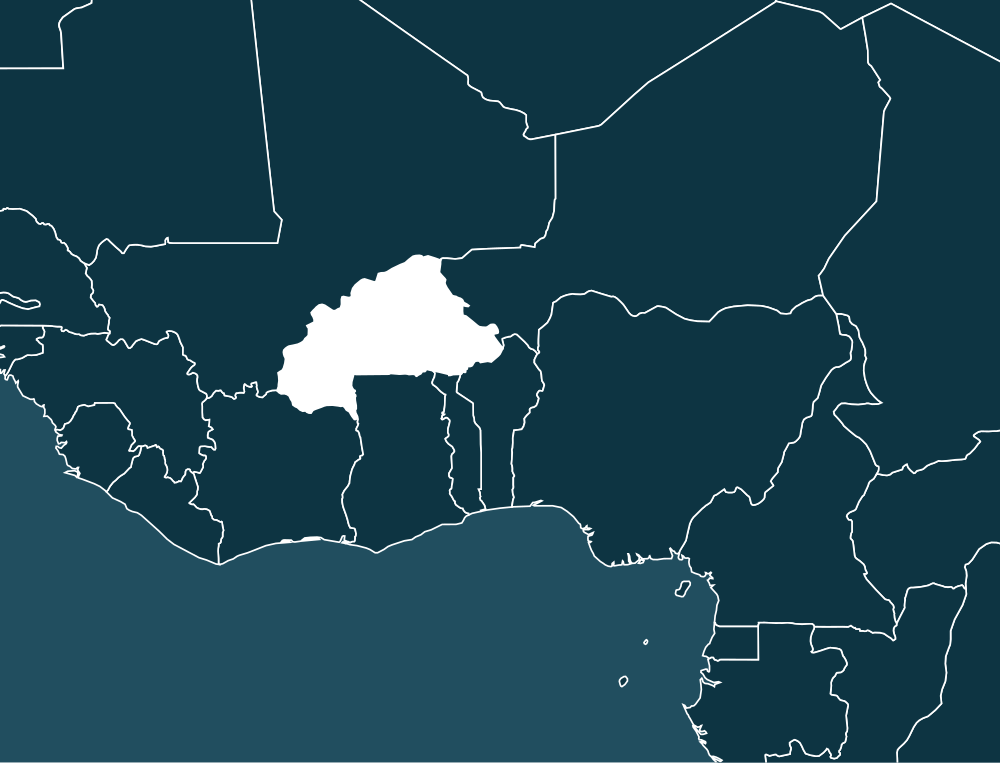
Today, Burkina Faso is situated among neighbors facing varied combinations of insurgency, political instability, border insecurity, and diplomatic tension. Its ties with Mali and Niger have deepened through the Alliance of Sahel States (AES), while concerns about jihadist spillover affect Benin, Togo, Ghana, and Côte d’Ivoire in different ways. The country’s departure from ECOWAS alongside its AES partners has reshaped regional cooperation, sanctions oversight, and the wider security landscape.
AML & Terrorist Financing
Burkina Faso has made notable AML/CFT progress, exiting FATF enhanced follow-up in February 2025 and strengthening supervision, beneficial-ownership transparency, suspicious transaction reporting, and CENTIF-BF resources, although effectiveness remains uneven. A cash-heavy informal economy, porous borders, and exposure to fraud, corruption, smuggling, narcotics, precious-stone trafficking, and other regional criminal networks continue to create significant laundering vulnerabilities, particularly across real estate, transport, NPOs, hospitality, banking, and money-transfer activities. Terrorist-financing and proliferation-financing controls have historically been especially challenging, with concerns involving the operationalisation of the CCGA, asset-freezing under relevant UN resolutions, NPO oversight, and the absence of earlier TF convictions, making continued cooperation with GIABA and further institutional implementation important.
Sanctions
Burkina Faso is required, as a UN member, to implement applicable Security Council sanctions, including measures appearing on the Consolidated List, but no Burkina Faso-imposed sanctions against other nations are identified. No international sanctions are currently in force against Burkina Faso, although its withdrawal from ECOWAS and subsequent regional tensions provide important context. Separately, alleged gold arrangements involving Russia, Africa Corps, and transit or laundering networks linked to ports in West Africa and the UAE have raised sanctions-evasion concerns and the possibility of future U.S. action.
Criminality
Burkina Faso faces persistent corruption and a range of illicit activity, including trafficking, smuggling, environmental offenses, drug transit, cyber fraud, money laundering, and criminal activity linked to jihadist and other organized groups. Public concern remains pronounced, while cases involving ministries, customs, municipalities, and senior officials have led to prosecutions; oversight bodies such as ASCE-LC, REN-LAC, the Cour des Comptes, and ARCOP continue to document irregularities, receive allegations, and pursue safeguards.
Reports
Burkina Faso faces deepening insecurity, with ISIS-Sahel and JNIM attacks contributing to more than 7,600 terrorism-related deaths in 2023, widespread displacement, and growing risks for civilians and children. Human trafficking also affects mining, domestic work, street begging, and conflict-displaced communities, while the Transition Authorities remain on the Tier 2 Watch List amid concerns involving victim protection, official complicity, VDP recruitment, and limited shelter capacity; institutions including CENTIF-BF and the Gold Anti-Fraud Agency are pursuing related financial-crime measures.
Industry/Product Sector Risk
Burkina Faso’s financial and non-financial sectors show pronounced exposure to money laundering and terrorism financing, particularly through gold and artisanal mining, casinos, currency exchange, remittances, real estate, banking, transport, and public works. Cash-based activity, informal markets, porous borders, limited beneficial-ownership transparency, and uneven AML/CFT implementation create channels for proceeds linked to corruption, customs and tax fraud, smuggling, trafficking, and terrorism financing. Oversight involving bodies such as the Ministry of Security, National Police, tourism and infrastructure authorities, and the specialised anti-fraud brigade for gold points to a broad supervisory landscape whose sector-specific risks merit closer examination.
Economy & Investment Climate
Burkina Faso’s economy has shown resilience, with growth supported largely by gold mining, while agriculture remains central to livelihoods amid persistent poverty, insecurity, and infrastructure constraints. The authorities are expanding state participation through initiatives such as PASD, ABI, CDI-BF, and the 2024 Mining Code, while still seeking foreign investment in areas including energy, agro-industry, finance, telecommunications, and manufacturing.
Cryptocurrency Regulations
Cryptocurrency in Burkina Faso occupies an uncertain legal space alongside the West African CFA franc, with no dedicated licensing, compliance registry, tax classification, or established framework for exchanges, tokens, or ICOs. While BCEAO, CENTIF, and GIABA-linked FATF standards point toward eventual AML/CFT expectations, the practical treatment of VASPs, transaction monitoring, and investor protections remains largely undefined.
Get full access
The information on this page is a brief summary. Get access to EDD country reports, all risk category scores and customisable weightings for 245 jurisdictions.