
Risk Indicators
- FATF/EU Blacklist/Greylist (Lower Concern)
- Terrorism Financing (Medium Concern)
- US Dept of State INCSR
- Proliferation Financing
- Corruption
- Criminality
- Resilience & Governance
- Financial Transparency
- Offshore Finance Centres
- Sanctions
Background
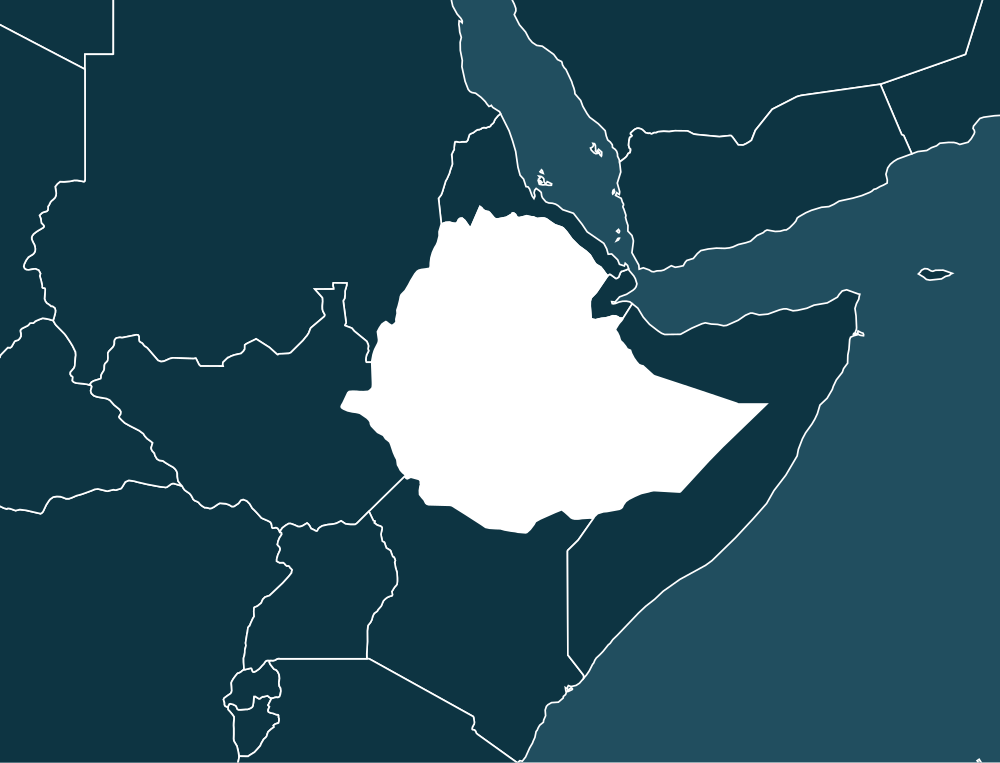
Ethiopia’s history reflects exceptional cultural and religious diversity, ancient human origins, imperial rule, resistance to colonial conquest, and the eventual emergence of a federal political order. From the Battle of Adwa and Haile SELASSIE’s international prominence to the Derg’s socialist state and the EPRDF’s long tenure, successive transitions have shaped the country’s modern institutions and identity. The 1994 constitution, the 2000 peace treaty with Eritrea, and the later rise of ABIY Ahmed Ali offer only part of the context behind Ethiopia’s evolving political landscape.
Recent developments have been marked by the EPRDF’s transformation into the Prosperity Party, the TPLF’s exclusion, and a devastating conflict that ended with a 2022 cessation of hostilities agreement. Ethnic-based violence involving actors such as the Oromo Liberation Army and Amhara militia Fano continues alongside unresolved regional tensions, including disputes involving Eritrea and the contested Al Fashaga area near Sudan. Ethiopia’s position among Eritrea, Sudan, South Sudan, Somalia, Djibouti, and Kenya places it within a wider environment of insurgency, fragile borders, humanitarian emergencies, UN sanctions, and potential sanctions-evasion networks.
AML & Terrorist Financing
Ethiopia has made notable AML/CFT progress, leaving FATF monitoring in 2019, yet its 2022 follow-up continued enhanced monitoring, with uneven Recommendation ratings and no areas assessed as highly or substantially effective. The country’s cash-heavy economy, informal and unlicensed money-transfer networks, limited financial-sector integration, and exposure to corruption, smuggling, trafficking, and tax offenses create risks that remain difficult to measure, particularly outside the formal banking system. Terrorist financing and proliferation-financing controls were assessed as having low effectiveness, while institutions such as the Financial Intelligence Service, National Bank of Ethiopia, and Ministry of Trade and Regional Integration continue developing supervision, enforcement, and beneficial-ownership transparency.
Sanctions
Ethiopia is not identified as imposing autonomous sanctions on other nations, though it supports applicable United Nations measures and operates amid regional regimes involving countries such as Eritrea, Somalia, Sudan, South Sudan, and Yemen. Measures against Ethiopia are concentrated in United States actions under Executive Order 14046 and OFAC listings—including the AL-HARAMAIN: ETHIOPIA BRANCH designation—alongside ITAR defense restrictions, while the United Kingdom applies military-goods and transit controls. The European Union has introduced narrower visa-related restrictions, whereas no comprehensive UN regime is currently in effect and countries including Australia, Canada, Japan, New Zealand, Switzerland, and Arab League members are not reported to maintain comparable sanctions.
Criminality
Corruption remains a significant concern in Ethiopia, particularly in tax collection, customs clearance, land administration, procurement, and financial services, despite the work of the Federal Ethics and Anti-Corruption Commission, Ministry of Justice, and national anti-corruption committee. Human smuggling, arms trafficking, wildlife crime, illicit trade, financial fraud, and cybercrime are also reported, with weak oversight and alleged involvement by officials and private actors complicating enforcement.
Reports
Ethiopia remained on Tier 2 for human trafficking, with increased prosecutions, victim identification, employment-agency oversight, and the opening of a government-run shelter in Dire Dawa, while concerns persisted around internal exploitation, migrant-worker protections, inadequate services, and official complicity. Counterterrorism efforts continued to focus on al-Shabaab and ISIS threats linked to Somalia, domestic conflict involving Amhara Fano and the OLA, border security, IGAD cooperation, and new measures addressing terrorism-related assets and financing.
Industry/Product Sector Risk
Ethiopia’s industry landscape is shaped by a bank-dominated formal economy alongside extensive cash-based informal activity, with particularly notable exposure in unlicensed money or value transfer services, real estate, transportation, and high-value goods. Agriculture, mining, telecommunications, pharmaceuticals, and public infrastructure also present distinctive vulnerabilities linked to smuggling, procurement, licensing, land administration, and cross-border trade, while the Ministry of Trade and regional bureaus retain important roles in company registration and oversight structures. The contrast between limited technological development, strict foreign-exchange controls, porous borders, and emerging investment sectors creates a complex environment in which corruption, tax offences, trafficking, and contraband flows may intersect across otherwise legitimate businesses.
Economy & Investment Climate
Ethiopia combines a large, youthful consumer base, low-cost labor, expanding sectors, and the reach of Ethiopian Airlines with recent efforts by the National Bank of Ethiopia and Ethiopian Investment Commission to liberalize finance, foreign exchange, and investment procedures. Yet foreign businesses face a demanding environment shaped by renewed currency pressures, state-owned enterprise advantages, regional conflict, uncertain taxation and customs administration, weak property protections, and limited access to effective commercial dispute resolution, even as IMF and World Bank support accompanies broader reforms.
Cryptocurrency Regulations
Ethiopia’s cryptocurrency landscape remains largely unrecognized for payments, with the National Bank of Ethiopia limiting the sector while the Information Network Security Agency’s registration directive signals tentative movement toward oversight. Tax treatment through the Ethiopian Revenue & Customs Authority and the absence of licensed VASPs, detailed AML rules, or ICO guidance leave market participants facing substantial uncertainty.
Get full access
The information on this page is a brief summary. Get access to EDD country reports, all risk category scores and customisable weightings for 245 jurisdictions.