
Risk Indicators
- FATF/EU Blacklist/Greylist (Lower Concern)
- Terrorism Financing (Lower Concern)
- US Dept of State INCSR
- Proliferation Financing
- Corruption
- Criminality
- Resilience & Governance
- Financial Transparency
- Offshore Finance Centres
- Sanctions
Background
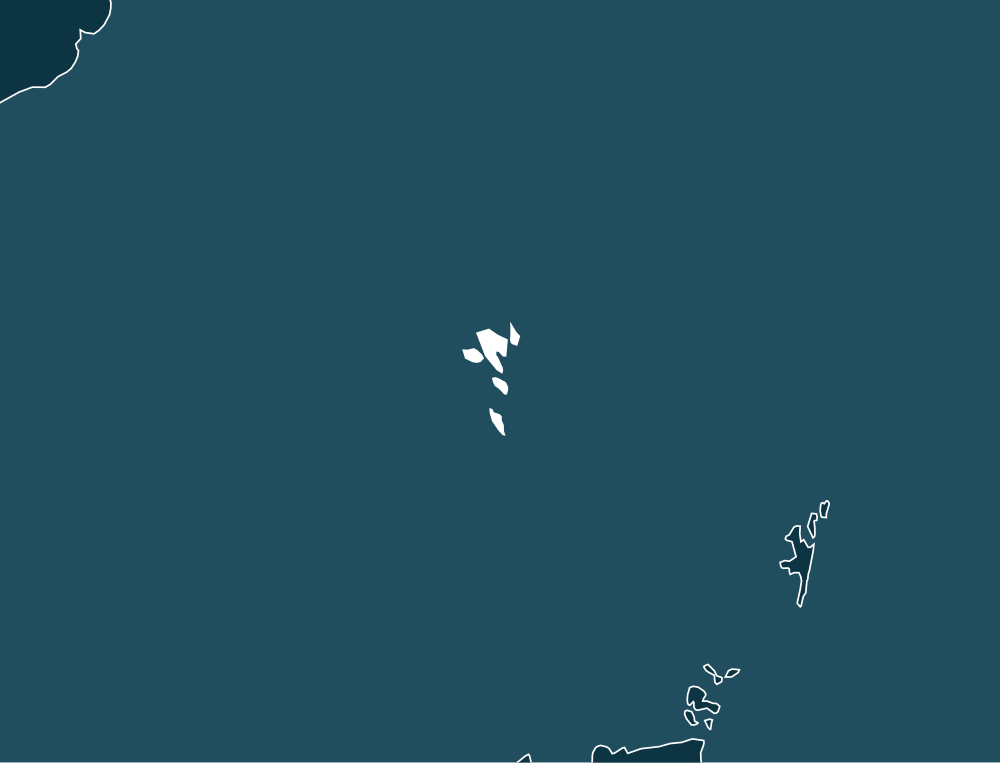
Populated by around A.D. 500 and later shaped by ninth-century Viking settlement, the Faroe Islands occupy a distinctive place in North Atlantic history. Their earliest settlers remain uncertain, while their later role as a stepping stone for Viking exploration helped connect the islands to wider regional developments. Politically linked to Denmark since the 14th century, the islands gained extensive internal autonomy under the 1948 Home Rule Act and remain outside the European Union.
Positioned between Iceland, Norway, Scotland, and Denmark, the Faroes sit within a stable but strategically sensitive North Atlantic neighborhood. Denmark’s intelligence services have highlighted the wider implications of Russia’s Arctic and North Atlantic ambitions, even though no immediate conventional attack on the islands is identified. The islands’ decision to adopt sanctions broadly resembling those of the EU—while exempting Russian fishing vessels from port bans—has made their fisheries sector a focal point for concerns involving sanction evasion, intelligence activity, and regional security.
AML & Terrorist Financing
As an autonomous territory within the Kingdom of Denmark, the Faroe Islands fall within a broader Danish AML/CFT framework, although the assessment identified no statutory framework for targeted financial sanctions relating to terrorist financing or proliferation financing in the islands. Denmark is not subject to FATF strategic-deficiency listing, yet weaknesses were noted in risk coordination, supervision, beneficial-ownership implementation, sanctions, and the resources and autonomy of the Money Laundering Secretariat. Terrorist-financing controls appear more developed at the Danish level, supported by PET and the DBA global trade and security team, while implementation among non-bank sectors, oversight of high-risk organisations, and the practical reach of sanctions remain areas warranting closer attention.
Sanctions
The Faroe Islands, as an autonomous territory within the Kingdom of Denmark, apply Denmark’s framework incorporating UN and EU restrictive measures, including asset freezes, travel bans, trade controls, and arms embargoes. Enforcement attention is particularly focused on Russian sanctions evasion through the Øresund and Great Belt, with bodies such as Finanstilsynet, SØIK/NSK, Skattestyrelsen, and Erhvervsstyrelsen supported by tougher 2025 penalties and Nordic-Baltic cooperation targeting the “dark fleet.” No international sanctions are currently in force against the Faroe Islands, while recent Danish actions involving Flügger and Alfa Laval indicate a more aggressive approach to breaches routed through third countries.
Criminality
As an autonomous territory within the Kingdom of Denmark, the Faroe Islands fall within a Danish framework in which the Ministry of Justice addresses corruption under the Penal Code, while broader concerns include cybercrime, drug trafficking, financial offenses, and organized criminal activity. OECD monitoring has identified insufficient priority for detecting and sanctioning foreign bribery, limited enforcement outcomes, and a need to extend relevant anti-bribery measures to Greenland and the Faroe Islands, with the Danish State Prosecutor for Serious Economic and International Crime serving as a key reporting channel.
Reports
The Faroe Islands operate within Denmark’s broader framework for combating trafficking, with the Faroe Islands Police, Faroese Work Environment Authority, and Faroese Tax Authority coordinating protections for a growing foreign workforce, while no 2024 figures on trafficking cases or identified victims were reported. Counterterrorism assessments from the Danish National Police’s Security and Intelligence Service characterize the islands’ threat as “minimal,” against a backdrop of Danish-led security cooperation and no reported terrorist incidents in 2023.
Economy & Investment Climate
The Faroe Islands have a high-income, low-unemployment economy anchored by fishing and fish processing, with tourism and information technology emerging as avenues for diversification and investment. Strong exports of fish products, Danish economic support, and autonomous trade policymaking underpin stability, while geographic isolation, environmental hazards, and dependence on a narrow group of industries remain important considerations.
Cryptocurrency Regulations
Cryptocurrency is permitted in the Faroe Islands but is neither legal tender nor governed by a dedicated local framework, leaving exchanges, tokens, and virtual-asset services in a largely undefined position. Royal Decree No. 79, Act No. 56, FATF principles, and the indirect influence of Denmark’s Financial Supervisory Authority provide important context, while licensing, tax treatment, Travel Rule obligations, and investor protections remain uncertain.
Get full access
The information on this page is a brief summary. Get access to EDD country reports, all risk category scores and customisable weightings for 245 jurisdictions.