
Risk Indicators
- FATF/EU Blacklist/Greylist (Lower Concern)
- Terrorism Financing (Medium Concern)
- US Dept of State INCSR
- Proliferation Financing
- Corruption
- Criminality
- Resilience & Governance
- Financial Transparency
- Offshore Finance Centres
- Sanctions
Background
Gabon is a sparsely populated, resource-rich country whose dense rainforests, petroleum reserves, and diverse communities—including the Fang—have shaped its history. From early kingdoms and Portuguese trade to French colonial extraction and independence in 1960, the country’s development reflects both regional commerce and changing external influence. Its modern political trajectory was dominated for decades by the Parti Democratique Gabonais, before a 2023 military intervention led by Gen. Brice OLIGUI Nguema redirected the country into a transitional phase.
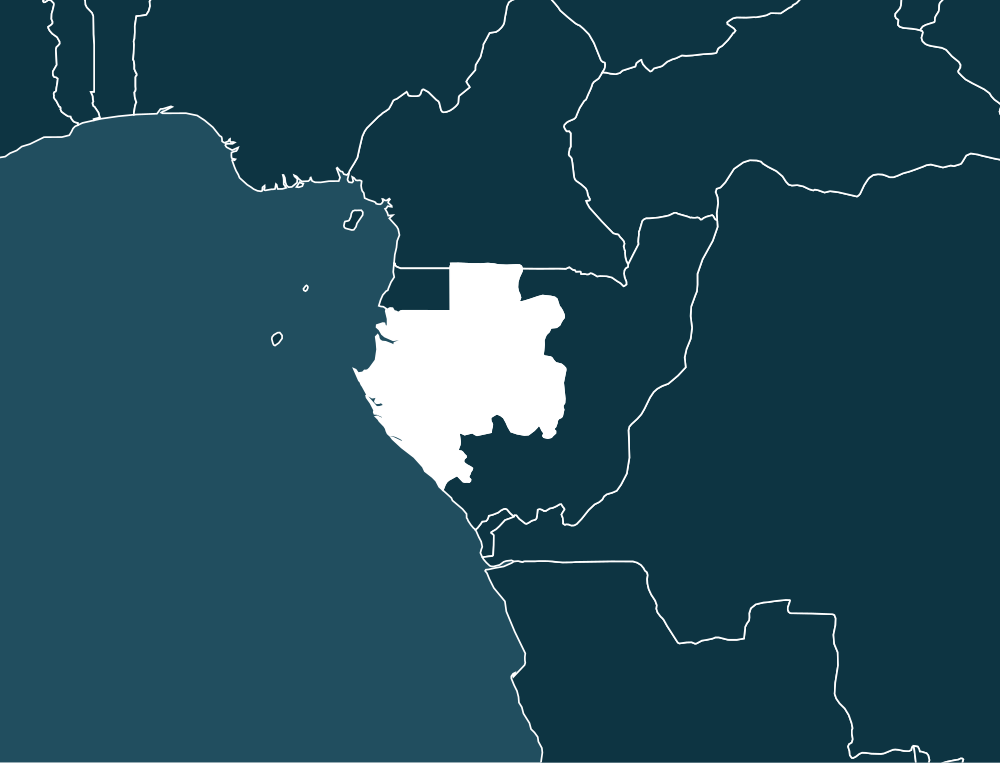
Situated between Equatorial Guinea, Cameroon, and the Republic of the Congo, Gabon occupies a comparatively stable position within a region marked by authoritarian governance, institutional fragility, and active conflict. The Central African Republic and eastern Democratic Republic of the Congo add wider regional concerns involving armed groups, minerals, arms flows, and international sanctions. Gabon’s own exposure now includes lifted African regional measures following the transition and scrutiny from the United States over naval support and the alleged use of Gabonese-flagged vessels in Russia’s oil-related sanction-evasion networks.
AML & Terrorist Financing
Gabon is not identified by FATF as having strategic AML deficiencies, yet its 2026 follow-up ratings show a framework with several areas still requiring improvement and no areas assessed as highly or substantially effective. The country faces laundering risks linked to environmental crime, corruption, public-fund embezzlement, illicit trafficking, cash-based activity and porous borders, while ANIF, COBAC and other authorities continue to face limitations in intelligence use, resources, supervision and beneficial-ownership transparency. Terrorist-financing and proliferation-financing controls remain particularly underdeveloped, with limited operational results, gaps in targeted financial sanctions and vulnerable NPO and non-bank sectors adding to the concerns.
Sanctions
Gabon is obligated to implement United Nations sanctions measures, including arms, travel, financial, and commodity restrictions administered through Security Council committees, but no international sanctions are currently in force against Gabon itself. In January 2025, the U.S. Treasury’s Office of Foreign Assets Control designated numerous Gabon-flagged vessels linked to Russia’s oil trade, including tankers associated with Sovcomflot. Gabon’s rapidly expanding maritime registry has nevertheless become connected to sanctions-evasion concerns involving reflagging, ship-to-ship transfers, AIS blackouts, and alleged Russian oil transshipment near southern Greece.
Criminality
Gabon’s legal framework criminalizes bribery, embezzlement, abuse of office, and related misconduct, yet enforcement is limited, official impunity remains a concern, and contracting in the oil, manganese, and timber sectors lacks transparency; the CNLCEI’s inactive mandate further underscores institutional gaps. Alongside corruption involving public funds and alleged money laundering, authorities face human trafficking, counterfeit medicines, illegal logging, wildlife crime, and illicit fishing, even as a Debt Taskforce reported recovering $157 million and state-embedded actors remain linked to several criminal activities.
Reports
Gabon was upgraded to Tier 2 after increased investigations, convictions, victim referrals, funding, and awareness efforts, although gaps in adult victim protection, case processing, data systems, and sentencing remain. Trafficking risks span Libreville, Port-Gentil, markets, roadside bars, plantations, mines, and border areas, affecting children and adults from Gabon and across West and Central Africa through forced labor, domestic servitude, and sexual exploitation.
Industry/Product Sector Risk
Gabon’s industry landscape presents a varied but significant exposure to illicit financial flows, particularly across oil and gas, mining, forestry, construction, telecommunications, transport, banking, and cash-intensive businesses. Rapidly expanding mobile money, informal currency exchange, online gaming, and cross-border trade coexist with gaps in customer identification, beneficial ownership transparency, supervision, and suspicious transaction reporting, while the Higher Gaming Commission, Gaming Police, COSUMAF, Ministry of Interior, and National Order of Chartered Accountants each feature within the broader oversight environment. The most prominent risks relate to corruption and embezzlement, tax and customs offences, environmental crime, smuggling, fraud, and the movement of proceeds through formal institutions, professional services, real estate, natural-resource value chains, and informal channels.
Economy & Investment Climate
Gabon combines political stabilization and modest economic growth with substantial natural-resource advantages, while seeking to diversify beyond oil into mining, timber processing, agribusiness, infrastructure, and ecotourism through initiatives such as the Nkok Special Economic Zone. Investment prospects are supported by institutions including ANPI-Gabon and FGIS, but bureaucratic delays, concentrated finance, foreign-exchange controls administered through BEAC, infrastructure gaps, corruption concerns, and evolving local-ownership rules continue to complicate the business environment.
Cryptocurrency Regulations
Gabon’s cryptocurrency landscape remains largely undefined: digital assets are not legal tender, the Central African CFA franc remains the recognized currency, and COBAC has barred financial institutions from facilitating cryptocurrency transactions. Under the broader CEMAC framework, including Regulation No. 01/03-CEMAC-UMAC, significant gaps persist around VASP licensing, transaction tracking, taxation, ICOs, and the FATF-aligned Travel Rule, leaving users and businesses to navigate an uncertain environment.
Get full access
The information on this page is a brief summary. Get access to EDD country reports, all risk category scores and customisable weightings for 245 jurisdictions.