
Risk Indicators
- FATF/EU Blacklist/Greylist (Lower Concern)
- Terrorism Financing (Medium Concern)
- US Dept of State INCSR
- Proliferation Financing
- Corruption
- Criminality
- Resilience & Governance
- Financial Transparency
- Offshore Finance Centres
- Sanctions
Background
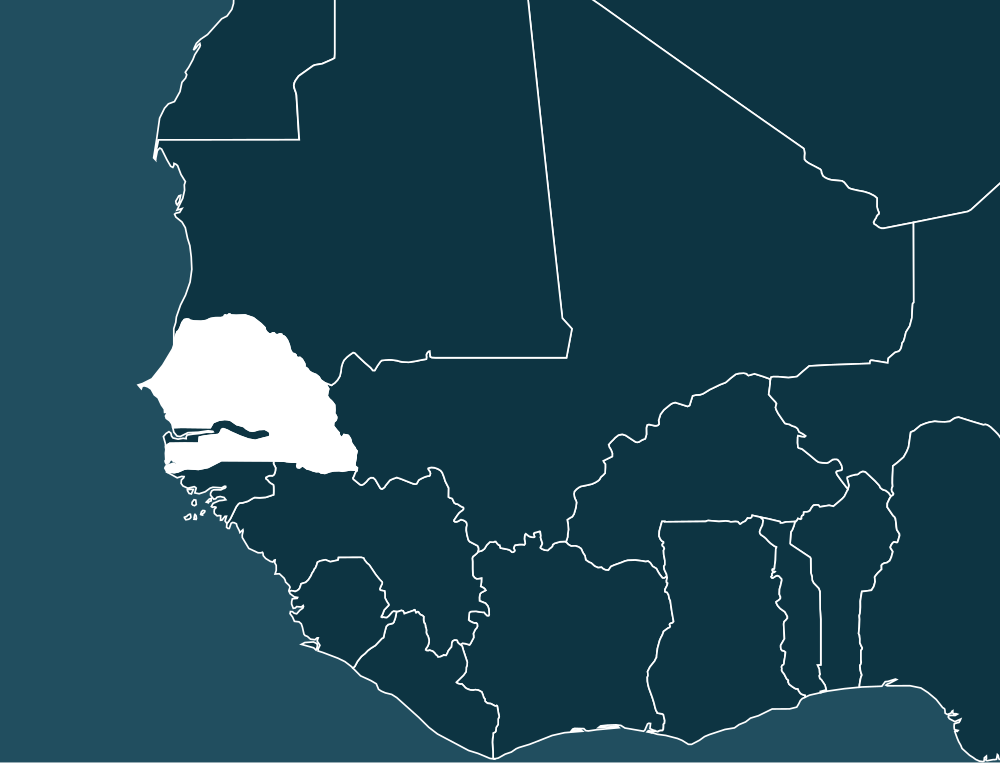
Senegal’s history stretches from continuous human habitation since the Paleolithic period through the Jolof Empire, European coastal trade, French colonial rule, and independence following the brief Mali Federation. Its position around Gorée made it a significant site in the Atlantic slave trade, while later experiments such as Senegambia reflected the challenges of regional political integration. Despite a long period of Socialist Party rule and constitutional disputes under Abdoulaye WADE, Senegal has maintained a reputation for democratic stability, peacekeeping, and mediation, with Bassirou Diomaye FAYE assuming the presidency in April 2024.
Security pressures remain shaped by the unresolved legacy of the Casamance insurgency and instability beyond Senegal’s borders. Mali presents the most immediate concern through JNIM activity near the Kayes region, its departure from ECOWAS, new trade barriers, and related smuggling risks, while Guinea continues to manage post-sanction economic disruption. Guinea-Bissau’s role in hosting 2025 peace talks and initiatives such as the Burkina Faso-Senegal security pact highlight Senegal’s continuing reliance on regional cooperation to contain cross-border threats.
AML & Terrorist Financing
Senegal has made notable AML/CFT progress, completing its FATF action plan in October 2024 and exiting enhanced monitoring, while GIABA and the 2024 follow-up process point to improving compliance and institutional capacity. Significant exposure remains from cash-intensive and informal activity, corruption, drug trafficking, cross-border flows, DNFBPs, beneficial-ownership gaps, gaming, and vulnerabilities linked to nonprofit organizations and regional security conditions. CENTIF, OFNAC, the PJF, BCEAO, and the National Office for the Recovery of Criminal Assets are central to the evolving response, but questions remain around effective supervision, enforcement, terrorist-financing investigations, proliferation-financing sanctions, and practical use of financial intelligence.
Sanctions
Senegal supports United Nations sanctions regimes, including measures involving arms, travel, finance, and commodities, but no international sanctions are currently in force against the country. Its exposure is primarily tied to possible regional evasion risks involving Mali, Guinea’s Conakry port, Russian military equipment, and vulnerable extractive-sector transactions rather than evidence of direct complicity. Revisions to the Mauritius tax arrangement, OECD-linked TIWB audits, and ECOWAS security alignment point to efforts to limit illicit financial channels and sanctions circumvention.
Criminality
Senegal has strengthened its anti-corruption framework, expanding OFNAC’s powers, operationalizing the Financial Judicial Pole, and making CENTIF oversight reports more accessible, while mandatory asset declarations by government members marked a notable transparency milestone. Nevertheless, organized crime and corruption risks remain evident across public institutions and the informal economy, with illicit proceeds linked to drug and human trafficking, counterfeit goods, illegal logging, cyber-enabled fraud, tax evasion, money laundering, and procurement abuse.
Reports
Senegal’s security landscape includes cocaine transit routes, extensive cannabis seizures, evolving synthetic-drug markets, and persistent capacity constraints affecting OCRTIS, CEPIAD, and cross-border enforcement efforts. At the same time, forced begging through daaras, exploitation linked to Kedougou’s gold-mining economy and migration, and ongoing efforts to improve victim protection and border screening remain significant concerns, even as Senegal records progress in counterterrorism coordination and financial-crime controls.
Industry/Product Sector Risk
Senegal’s financial and commercial landscape presents varied money-laundering exposure, with particularly elevated vulnerabilities in retail banking, electronic money, remittances, foreign exchange, real estate, casinos, high-value goods, and several DNFBPs. Oversight is shaped by institutions including the BCEAO, UMOA Banking Commission, CIMA, CRCA, CREPMF, and BRVM, though cash dependence, cross-border activity, limited beneficial-ownership transparency, and uneven risk-based supervision remain recurring concerns. Beyond finance, informal commerce, transport, hospitality, mining, fisheries, telecommunications, public works, politically exposed activity, and non-profit organizations offer further channels through which proceeds linked to corruption, fraud, smuggling, drug trafficking, and tax or customs offences may be moved or concealed.
Economy & Investment Climate
Senegal combines longstanding political stability with expanding opportunities in energy, infrastructure, agriculture, mining, and digital services, as the Faye-Sonko administration advances Vision Senegal 2050 and the Technological New Deal while APIX continues facilitating investment. Offshore production at Sangomar and Greater Tortue Ahmeyim adds momentum, but investors must weigh substantial fiscal pressures, including debt levels certified by the Supreme Audit Authority, alongside tax, customs, financing, judicial, and labor-market constraints.
Cryptocurrency Regulations
Senegal permits cryptocurrency activity in a largely undefined space: the CFA franc remains the only recognized legal tender, while Law No. 2018-03, BCEAO guidance, and CENTIF oversight provide the main compliance touchpoints without a dedicated VASP licensing regime. Tax treatment, exchange obligations, token offerings, and transaction monitoring therefore rely on general rules and evolving regional discussions, leaving important questions around KYC, reporting, investor protection, and enforcement unresolved.
Get full access
The information on this page is a brief summary. Get access to EDD country reports, all risk category scores and customisable weightings for 245 jurisdictions.