
Risk Indicators
- FATF/EU Blacklist/Greylist (Lower Concern)
- Terrorism Financing (Lower Concern)
- US Dept of State INCSR
- Proliferation Financing
- Corruption
- Criminality
- Resilience & Governance
- Financial Transparency
- Offshore Finance Centres
- Sanctions
Background
Discovered and claimed for Spain in 1499 and acquired by the Dutch in 1636, Aruba’s development has been shaped by gold mining, oil refining, and tourism. The island’s modern political status reflects its 1986 separation from the Netherlands Antilles and its position as a semi-autonomous member of the Kingdom of the Netherlands. Although a 1990 request halted movement toward full independence, Aruba’s historical ties continue to influence its regional and economic outlook.
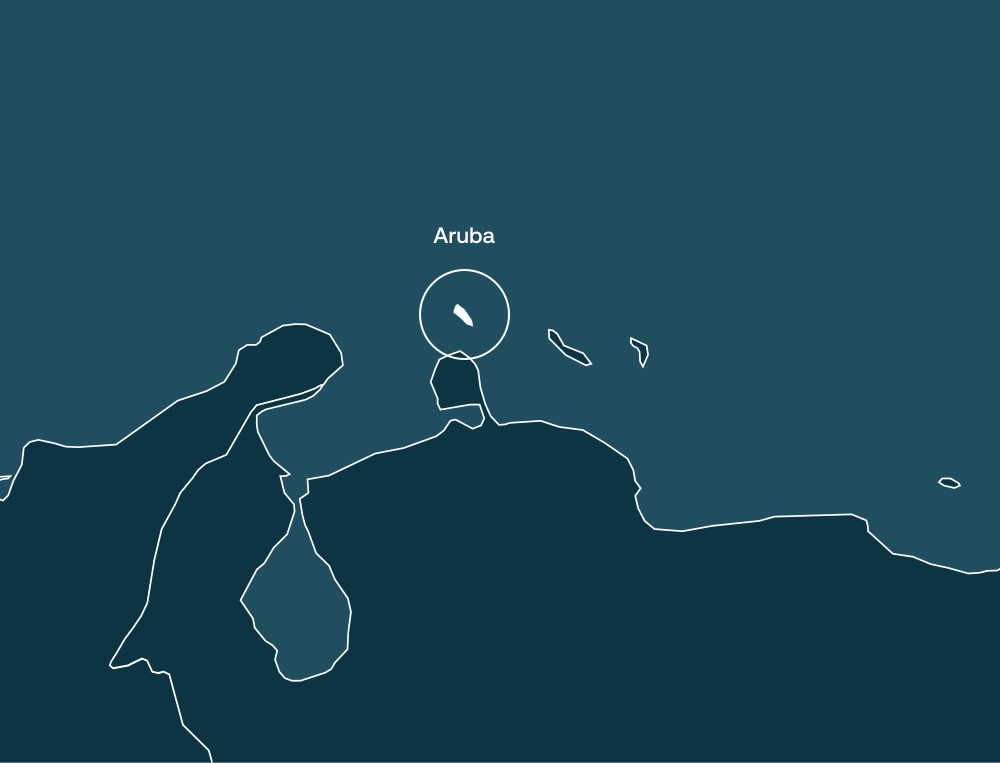
Aruba faces its most significant external pressures from nearby Venezuela, where political repression, humanitarian hardship, migration, and criminal activity have intensified following the disputed 2024 presidential election. U.S. and European sanctions involving Venezuela’s PdVSA, including secondary tariffs introduced in 2025, add complexity to cross-border commerce and regional stability. Curaçao and Bonaire remain generally stable but, alongside other Caribbean neighbors, present a wider environment shaped by political volatility, organized crime, trafficking, migration, and sanctions-related obligations.
AML & Terrorist Financing
Aruba has strengthened its AML/CFT framework and is not identified by FATF as having strategic deficiencies, yet its medium-high money-laundering risk reflects exposure to drug trafficking, bulk cash and gold smuggling, corruption, fraud, underground banking, and vulnerabilities in sectors such as casinos, real estate, and money transfers. The Centrale Bank van Aruba, FIU-Aruba, Public Prosecutor’s Office, Korps Politie Aruba, and newer specialized units contribute to supervision, intelligence, investigations, and asset recovery, while resource constraints, uneven implementation, incomplete beneficial-ownership information, and gaps affecting virtual assets and non-profit organizations remain relevant concerns. Terrorist-financing risks are assessed as medium despite no recorded prosecutions, whereas proliferation-financing controls are less effective, with delays in sanctions communication, limited guidance, and legal shortcomings potentially affecting the timely freezing of assets.
Sanctions
Aruba enforces UN-derived sanctions through the Sanctions State Ordinance 2006, including asset-freezing measures concerning Al Qaeda, the Taliban, domestic designations, and listed parties connected to Libya, with financial institutions required to monitor UN and applicable EU lists. Authorities have also faced sanctions-evasion concerns involving Venezuelan gold moving through Aruba’s free-trade infrastructure toward intermediaries in Turkey, the United Arab Emirates, and Suriname, prompting stronger financial-intelligence sharing and customs screening. No international sanctions are currently in force against Aruba, although vulnerabilities involving transit routes, shell companies, and complex ownership structures continue to attract scrutiny.
Criminality
Available information offers only a limited basis for characterizing corruption in Aruba, with no detailed findings on criminal activity or enforcement institutions provided here. A fuller assessment would require closer examination of Aruba’s governance safeguards, corruption controls, and relevant investigative or prosecutorial activity.
Reports
Aruba remains a strategically positioned transit point for cocaine, with the Korps Politie Aruba, Dutch Koninklijke Marechaussee, Dutch Caribbean Coast Guard, and U.S. partners pursuing investigations involving go-fast vessels, cargo containers, and commercial flights. Authorities made progress in identifying trafficking victims, extending protections, and initiating a prosecution, yet persistent vulnerabilities among irregular migrants and foreign workers, along with limited convictions and coordination challenges, continue to shape the island’s enforcement landscape.
Industry/Product Sector Risk
Aruba’s tourism-driven economy creates a distinctive risk landscape centered on casinos, hospitality, real estate, cash-intensive businesses, and cross-border financial activity. Retail banks, money remitters, currency exchange offices, legal professionals, and company service providers add further complexity, particularly where foreign customers, ownership structures, and higher-risk corridors are involved. Detailed sector assessments also point to emerging considerations around virtual assets, transportation, construction, politically exposed persons, and the strengthening of supervisory and investigative arrangements.
Economy & Investment Climate
Aruba’s prosperous but highly service-oriented economy is led by tourism, supported by petroleum transshipment and banking, while its recovery continues to contend with substantial public debt and the need for greater diversification. Its openness to foreign investment, stable position within the Kingdom of the Netherlands, free trade zones, and steady Aruban florin exchange rate provide a foundation for growth, even as tourism-related waste, plastic pollution, and external trade dependencies remain notable considerations.
Cryptocurrency Regulations
Aruba permits cryptocurrency activities without recognizing digital assets as legal tender, while its September 2021 AML/CFT amendments bring Virtual Asset Service Providers within a developing framework shaped by FATF standards. Oversight involving the Financial Intelligence Unit and Central Bank of Aruba emphasizes due diligence, monitoring, and suspicious-activity reporting, though licensing, taxation, token offerings, and risk-based supervision remain areas of evolving guidance.
Get full access
The information on this page is a brief summary. Get access to EDD country reports, all risk category scores and customisable weightings for 245 jurisdictions.