
Risk Indicators
- FATF/EU Blacklist/Greylist (Lower Concern)
- Terrorism Financing (Lower Concern)
- US Dept of State INCSR
- Proliferation Financing
- Corruption
- Criminality
- Resilience & Governance
- Financial Transparency
- Offshore Finance Centres
- Sanctions
Background
Azerbaijan is a secular, majority-Turkic and majority-Shia Muslim state whose modern identity was shaped by a brief period of independence, seven decades in the Soviet Union, and a prolonged struggle over Nagorno-Karabakh. The conflict with Armenia, culminating in Azerbaijan’s 2020 gains and its one-day military operation in September 2023, transformed the region and prompted the flight of nearly the entire ethnic Armenian population to Armenia. Since independence in 1991, oil and gas revenues have supported infrastructure and reduced poverty, while corruption and allegations of authoritarianism continue to influence assessments of the Aliyev family’s enduring rule.
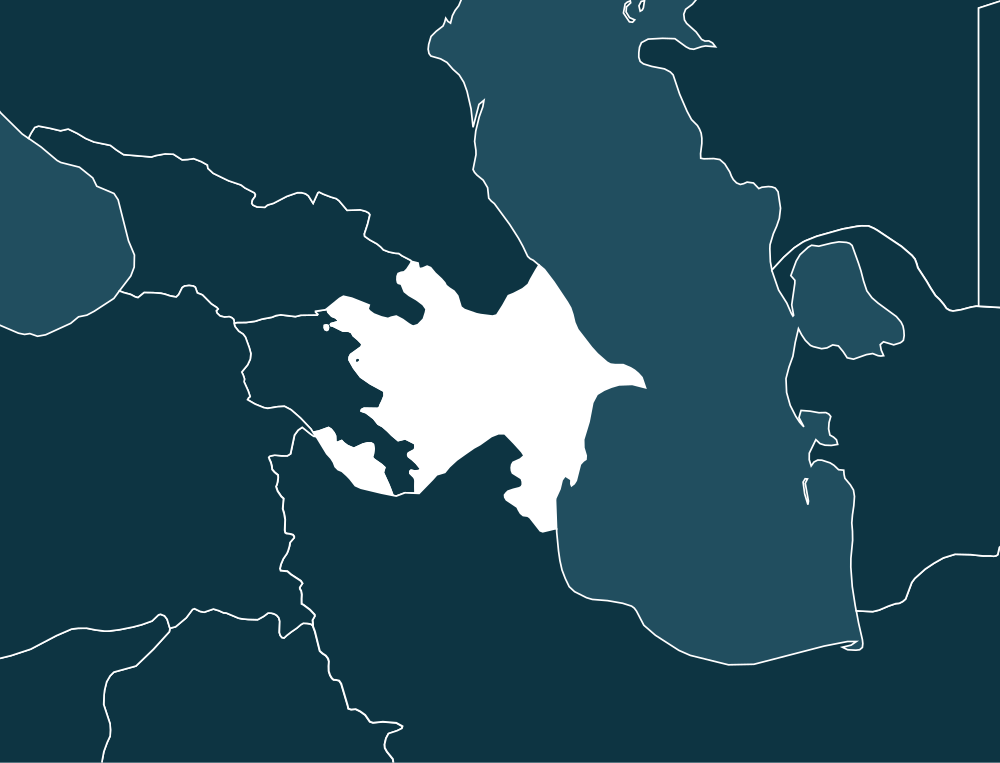
Bordering Armenia, Iran, Russia, Georgia, and Turkey, Azerbaijan occupies a strategic position amid shifting alliances, contested security relationships, and regional trade routes. Tensions with Armenia remain connected to demarcation and military pressures, while relations with Iran reflect competing regional interests and relations with Russia are shaped by the war in Ukraine and Moscow’s changing influence in the South Caucasus. The country’s links to Turkey, Iran, and Russia also place it within scrutiny surrounding Western sanctions, including alleged channels for moving goods, energy, and technology around restrictions.
AML & Terrorist Financing
Azerbaijan is not subject to FATF enhanced listing, but MONEYVAL’s 2025 assessment indicates broad technical compliance alongside limited effectiveness, with the country remaining under enhanced follow-up. Key vulnerabilities include corruption, tax crime, smuggling, drug trafficking, real estate, cash, and the misuse of legal persons, while the Financial Monitoring Service’s suspicious transaction intelligence is not consistently translating into investigations, prosecutions, or asset tracing. Terrorist-financing controls have produced seven convictions and some targeted freezes, yet risk analysis, proactive sanctions communication, non-profit oversight, beneficial-ownership transparency, and the newly developing proliferation-financing framework remain areas warranting closer attention from bodies including the FMS, Central Bank of Azerbaijan, and relevant law-enforcement agencies.
Sanctions
Azerbaijan is not subject to comprehensive UN or OFAC country-wide sanctions, but faces a patchwork of arms restrictions and targeted measures connected to the Nagorno-Karabakh conflict, human-rights concerns, and alleged facilitation of Russian oil trade. The EU’s 18th and 19th packages, UK designations involving the ASCO-operated Zangazur and five Azerbaijani nationals, and Canada’s action against an Azerbaijani energy trader illustrate the growing focus on state-linked entities, while several vessel listings were later lifted. No Azerbaijani-imposed sanctions on other nations are identified, although its Caspian shipping routes, SOCAR’s STAR refinery, and the Middle Corridor feature prominently in wider sanctions-evasion concerns.
Criminality
Azerbaijan has established anti-corruption structures, including the Law on Combating Corruption and the Commission on Combating Corruption, but enforcement and impartial application remain uneven, with particular concerns surrounding procurement, licensing, dispute settlement, and regulation. Criminal activity also includes trafficking, smuggling, drug transit, cyberattacks, and large-scale financial misconduct, while alleged links between political and business elites and criminal networks raise further questions about accountability and transparency.
Reports
Azerbaijan’s security landscape spans concerns over delayed Vienna Document 11 military-activity notifications, its role along Southern Caucasus drug-trafficking routes, and persistent trafficking risks affecting domestic and overseas victims. At the same time, agencies including the Ministry of Defense, Ministry of Internal Affairs, State Security Service, State Border Service, and Financial Monitoring Service have pursued regional cooperation, border interdiction, counterterrorism, victim assistance, and anti-trafficking measures, with notable gaps in labor inspections and proactive victim identification.
Industry/Product Sector Risk
Azerbaijan’s financial and broader commercial landscape is shaped by a dominant banking sector, substantial cash usage, major energy and infrastructure activity, and its position along important regional trade and transit routes. Key areas of exposure include retail banking, currency exchange, remittances, real estate, oil and gas, politics, construction, transportation, and trade, with recurring themes involving corruption, tax crime, smuggling, opaque ownership, and cross-border flows. The evolving role of the tax authority, notaries, banks, the national post operator, and the Bar Association offers only part of the picture, with further detail revealing how sector-specific controls and emerging channels such as virtual assets affect Azerbaijan’s risk environment.
Economy & Investment Climate
Azerbaijan’s economy continues to draw strength from hydrocarbons, with SOCAR, SOFAZ, and expanding links to European gas markets shaping the country’s fiscal and trade outlook, while the government pursues opportunities in renewables, logistics, agriculture, tourism, and ICT. Although AzPromo-backed reforms, the Alat Free Economic Zone, and Middle Corridor investments offer avenues for diversification, concentrated state influence, uneven enforcement, corruption concerns, limited access to capital, and weak judicial and intellectual-property protections continue to complicate the investment environment.
Cryptocurrency Regulations
Azerbaijan’s cryptocurrency sector remains in transition: virtual assets are not legal tender, yet the Financial Monitoring Service applies AML/CFT duties and the Central Bank of the Republic of Azerbaijan is developing a licensing framework around its February 2023 virtual-asset regulation and Regulatory Sandbox Registry. Tax treatment, self-reporting obligations, uncertain Travel Rule application, and planned CARF implementation point to a landscape where meaningful compliance requirements already exist alongside unresolved questions about exchanges, token offerings, and investor protection.
Get full access
The information on this page is a brief summary. Get access to EDD country reports, all risk category scores and customisable weightings for 245 jurisdictions.