
Risk Indicators
- FATF/EU Blacklist/Greylist (Lower Concern)
- Terrorism Financing (Medium Concern)
- US Dept of State INCSR
- Proliferation Financing
- Corruption
- Criminality
- Resilience & Governance
- Financial Transparency
- Offshore Finance Centres
- Sanctions
Background
Barbados evolved from a British settlement shaped by enslaved African labor and sugar cultivation into an independent Caribbean state with a more diversified economy. Social and political reforms in the mid-20th century preceded independence in 1966, while tourism and manufacturing later overtook sugar, rum, and molasses in importance. In 2021, the country became a republic, with Sandra Mason serving as its first president.
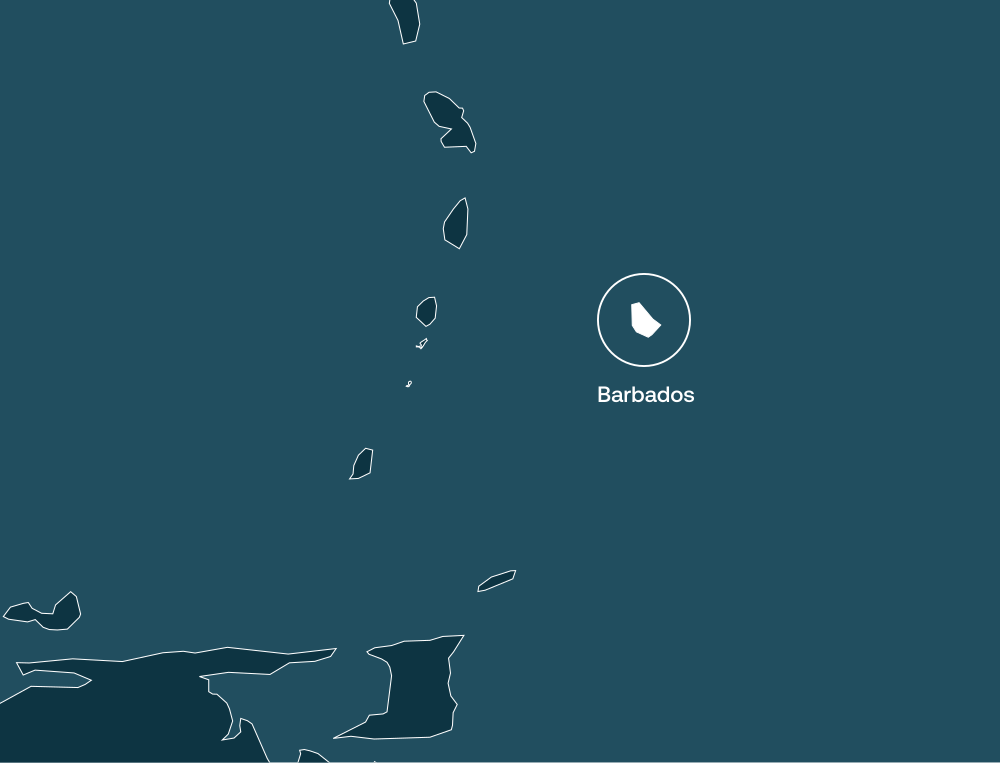
Positioned among several eastern Caribbean and South American maritime neighbors, Barbados is not directly exposed to an armed conflict but remains part of a region marked by crime, trafficking, migration, and uneven governance. Saint Lucia and Saint Vincent and the Grenadines present nearby concerns involving law enforcement, border controls, asset management, and money-laundering risks, while Venezuela’s instability and extensive international sanctions create broader regional effects. The surrounding sanctions landscape is shaped principally by United Nations measures, with Martinique also subject to French and European Union requirements.
AML & Terrorist Financing
Barbados has made significant AML/CFT progress, exiting FATF increased monitoring in February 2024 after strengthening risk-based supervision, beneficial ownership measures, FIU capacity, prosecutions, and confiscation practices. Yet concerns remain around complex offshore structures, cross-border cash flows, uneven DNFBP supervision by bodies including AMLA, the IBU, CBB, and FSC, and the resources available to the FIU and financial crime investigators. Terrorist-financing and proliferation-financing controls were assessed as having low effectiveness, with gaps involving NPO monitoring, documented counter-terrorism strategy, timely targeted financial sanctions, and the deeper use of financial intelligence in enforcement.
Sanctions
Barbados supports United Nations sanctions regimes, including measures involving financial restrictions, travel bans, arms embargoes, and other targeted controls, while no international sanctions are currently in force against Barbados. Its maritime registry has nevertheless drawn scrutiny over sanctioned Russian, Iranian, and Venezuelan-linked shipping, including Sovcomflot tankers, alleged “dark fleet” activity, and routes involving STS transfers and cargo relabeling. Following diplomatic pressure and cooperation with bodies such as Lloyd’s List Intelligence, the Barbados Maritime Ship Registry introduced enhanced screening and Marine Circular MC 052005, including removal and monetary penalties for sanctioned vessels, though significant enforcement vulnerabilities reportedly remained.
Criminality
Barbados faces localized organized crime involving cocaine, cannabis, firearms, and occasional human trafficking or smuggling, alongside allegations of low-level official bribery and limited political influence by gang leaders. Anti-corruption measures include the Prevention of Corruption Act, the Financial Intelligence Unit, and the Anti-Corruption and Anti-Terrorism Agency, while proposed transparency reforms and an unproclaimed Integrity of Public Life law point to an evolving framework.
Reports
Barbados has strengthened its counternarcotics framework through U.S.-supported judicial reforms, including Criminal Procedure Rules that introduce a 180-day limit for initiating drug-trafficking trials, alongside broader RSS and CARICOM IMPACS cooperation. Human-trafficking concerns remain more pronounced, with Barbados placed on the Tier 2 Watch List amid persistent vulnerabilities among migrants and women in commercial sex, limited victim identification and services, and no reported convictions under the anti-trafficking law.
Industry/Product Sector Risk
Barbados’s industry landscape combines a substantial, internationally connected banking and financial services sector with tourism, transport, gaming, real estate, insurance, securities, and professional services that present varied levels of exposure. The Central Bank of Barbados, Financial Services Commission, International Business Division, and Financial Intelligence Unit each have important supervisory roles, although attention is drawn to uneven risk-based oversight, beneficial ownership transparency, and AML/CFT implementation across certain sectors. Particularly notable themes include gaming arcades and port-related cash and narcotics flows, alongside the gatekeeping role of trust and company service providers in an international financial centre.
Economy & Investment Climate
Barbados remains a services-led economy, with tourism and other internationally oriented activities providing much of its momentum while agriculture and manufacturing offer more specialized opportunities amid persistent external pressures. With the Central Bank of Barbados supporting monetary stability and Invest Barbados highlighting emerging areas such as renewable energy, life sciences, agro-processing, and technology, the country is entering a period shaped by continued reforms and a changing investment landscape.
Cryptocurrency Regulations
Barbados permits cryptocurrency activity without recognizing it as legal tender, while the Financial Services Commission, Central Bank of Barbados, and Financial Intelligence Unit anchor an evolving oversight model centered on AML/KYC obligations rather than dedicated exchange licensing. With token offerings, tax treatment, market conduct, and VASP supervision still developing—and the OECD Crypto-Asset Reporting Framework targeted for 2027—the jurisdiction presents a cautiously engaged but clearly unfinished regulatory landscape.
Get full access
The information on this page is a brief summary. Get access to EDD country reports, all risk category scores and customisable weightings for 245 jurisdictions.