
Risk Indicators
- FATF/EU Blacklist/Greylist (Lower Concern)
- Terrorism Financing (Medium Concern)
- US Dept of State INCSR
- Proliferation Financing
- Corruption
- Criminality
- Resilience & Governance
- Financial Transparency
- Offshore Finance Centres
- Sanctions
Background
Benin’s history reflects a complex blend of migrations, ethnic communities, and powerful regional traditions, including the rise of Dahomey around Abomey and its involvement in the Atlantic slave trade. After French conquest and independence in 1960, the country moved through military rule, Marxist-Leninist government, and a notable transition toward representative politics. The presidencies of Mathieu KEREKOU, Nicephore SOGLO, Thomas YAYI Boni, and Patrice TALON mark successive phases in that political evolution, including growing concerns about pluralism and dissent.
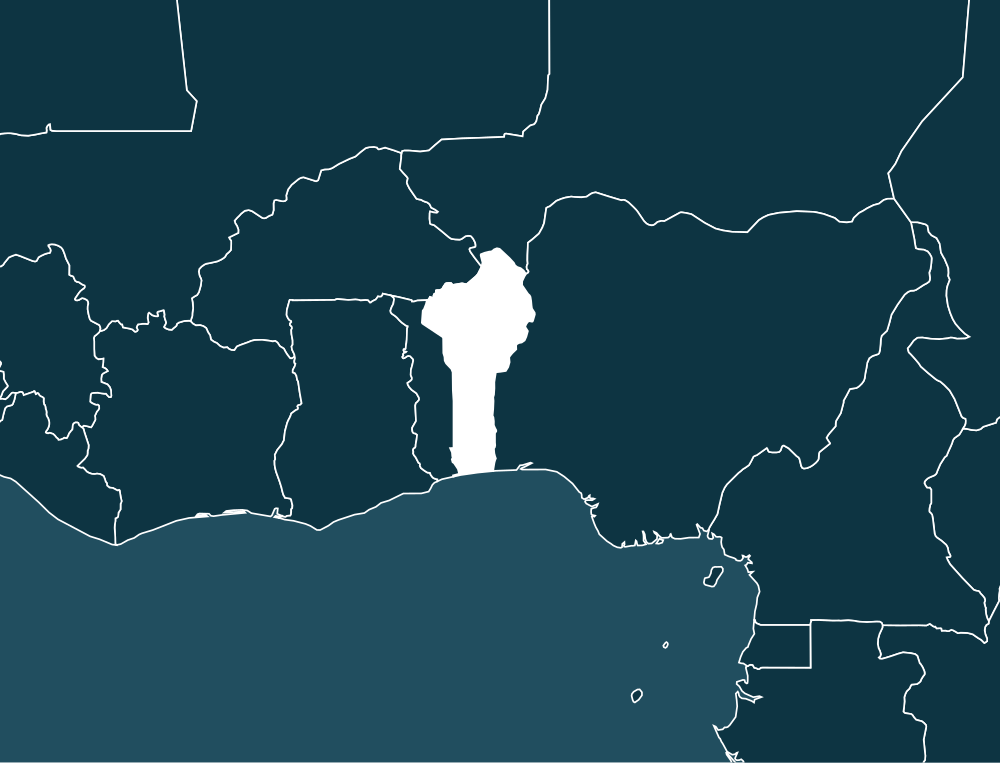
Positioned between Nigeria, Togo, Burkina Faso, and Niger, Benin faces a regional environment shaped by jihadist violence, political upheaval, trafficking, and porous borders. Spillover from groups such as JNIM and Boko Haram, alongside coups and sanctions involving ECOWAS, the EU, and the African Union, creates varied security and compliance pressures. Cross-border movements involving arms, resources, illicit funds, and other goods make neighboring instability particularly relevant to Benin’s wider risk landscape.
AML & Terrorist Financing
Benin is not on the FATF list of jurisdictions with strategic deficiencies, yet its 2025 assessment leaves the country in enhanced follow-up, with many recommendations only largely compliant and no effectiveness area rated substantially effective or highly effective. Recent reforms—including the AML/CFT Act, CTN-AML/CFT, CENTIF, BEF, and CRIET—have strengthened the framework, but informal finance, cash use, porous borders, real estate, foreign exchange, and weak beneficial-ownership controls continue to create exposure to laundering linked to drugs, fraud, corruption, trafficking, and smuggling. Terrorist-financing and proliferation-financing controls remain particularly underdeveloped, reflected in low effectiveness for Immediate Outcomes 9–11, limited investigations and prosecutions, delayed sanctions-list dissemination, weak NPO oversight, and resource and coordination constraints affecting CENTIF, law enforcement, supervisors, and other competent authorities.
Sanctions
Benin is obligated to support United Nations sanctions regimes, including measures involving arms, travel, finance, and commodities, but no international sanctions are currently in force against the country. Its ports and trade corridors—particularly Cotonou and routes toward the Sahel—have nevertheless drawn scrutiny as channels for rerouting dual-use goods and military equipment to Russia. Recent enforcement actions have focused on Benin-based intermediaries linked to the re-export of microelectronics, industrial machinery, and aerospace components to Russian defense entities.
Criminality
Benin has a broad legal framework under Law No. 2011-20, including asset declarations, conflict-of-interest rules, whistleblower protections, and penalties for bribery, yet enforcement is described as inconsistent and corruption concerns persist in procurement, customs, taxation, and licensing. The country is also identified as a source, transit, and destination point for human trafficking, while illicit trade, drug transit, cyber scams, financial crime, and the possible involvement of corrupt officials remain areas warranting closer attention.
Reports
Benin faces interconnected challenges involving illicit drug transit, trafficking of women and children, and terrorist activity concentrated in northern departments including Atacora, Alibori, Borgou, and Donga, while vulnerable groups are exposed to forced labor, sex trafficking, forced begging, and exploitation through informal recruitment. Enforcement efforts include OCERTID, the CRIET, a new anti-trafficking action plan, and counterterrorism units, but limited laboratory capacity, victim services, intelligence coordination, and concerns about politicized prosecutions continue to shape the country’s response.
Industry/Product Sector Risk
Benin’s financial and commercial landscape presents a varied AML/CFT risk profile, shaped by extensive cash usage, informal activity, cross-border trade, and rapidly expanding mobile-money services. The NRA and MER identify particularly notable exposure in foreign exchange, real estate, banking, cash-intensive businesses, politics, and public works, while highlighting uneven supervision, limited beneficial-ownership transparency, and low suspicious transaction reporting across several sectors. At the same time, smaller industries appear less material, leaving important questions around areas such as virtual assets, non-profit organizations, trade finance, and professional gatekeepers for closer examination under Benin’s AML/CFT framework.
Economy & Investment Climate
Benin’s economy is gaining momentum, with 7.5 percent growth in 2024 supported by infrastructure, agro-processing, textiles, and the expanding Glo-Djigbé Industrial Zone, while APIEx and the revised Investment Code signal a more investor-friendly direction. Opportunities are tempered by judicial and land-rights constraints, limited SME financing, informality, and rising insecurity in the north, even as WAEMU integration, OHADA protections, and initiatives involving CDC Bénin point to broader efforts to deepen resilience and industrial capacity.
Cryptocurrency Regulations
Benin is moving toward a regulated cryptocurrency environment under Law No. 2024-01, with Virtual Asset Service Providers expected to secure preliminary approval and follow AML/CFT requirements overseen by institutions including the Ministry of Economy and Finance and BCEAO, while digital assets remain outside legal tender status. Tax treatment and emerging regional alignment add further complexity, but questions around licensed providers, transaction monitoring, the Travel Rule, and frameworks for ICOs and tokenized assets remain open.
Get full access
The information on this page is a brief summary. Get access to EDD country reports, all risk category scores and customisable weightings for 245 jurisdictions.