
Risk Indicators
- FATF/EU Blacklist/Greylist (Lower Concern)
- Terrorism Financing (Lower Concern)
- US Dept of State INCSR
- Proliferation Financing
- Corruption
- Criminality
- Resilience & Governance
- Financial Transparency
- Offshore Finance Centres
- Sanctions
Background
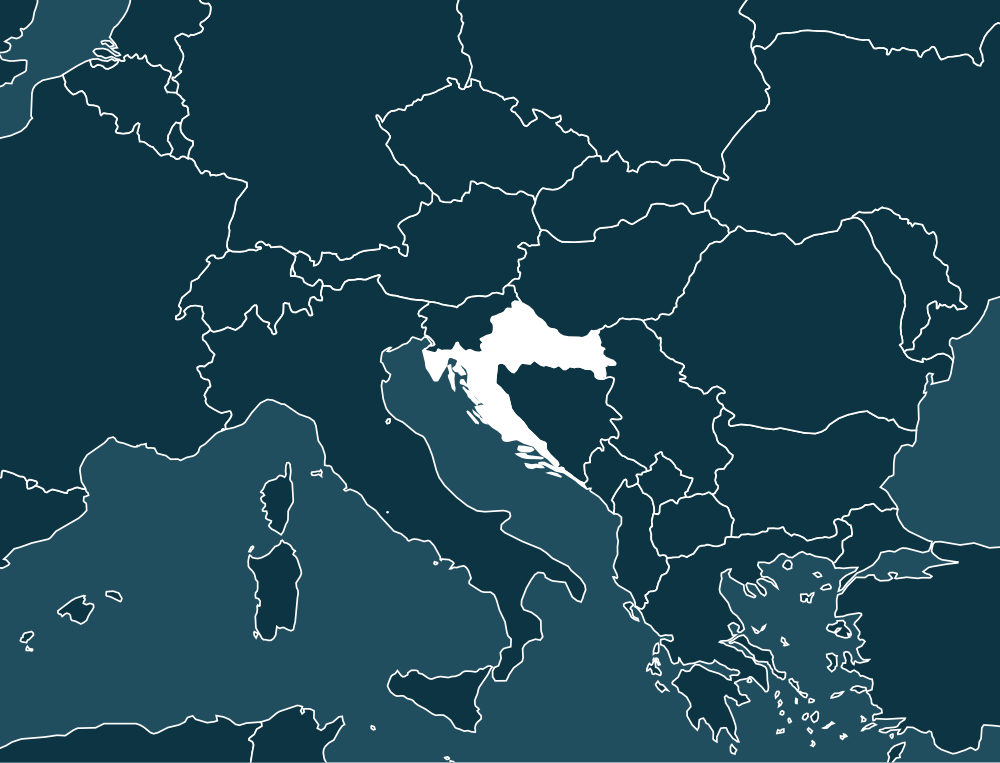
Croatia’s modern identity reflects successive periods within the Austro-Hungarian Empire, Yugoslavia, and the difficult path to independence declared in 1991. After years of conflict and the UN-supervised reintegration of eastern Slavonia in 1998, Croatia entered NATO in 2009 and the European Union in 2013. Its further integration into the Eurozone and Schengen Area in January 2023 highlights its close alignment with European institutions.
Positioned between Central and Southeast Europe, Croatia is shaped by unresolved disputes and varying degrees of political and security pressure among neighbors including Slovenia, Hungary, Serbia, Bosnia and Herzegovina, and Montenegro. Regional concerns range from Serbia’s ties to Russian energy and tensions surrounding Kosovo to political divisions in Bosnia and Herzegovina, migration pressures, organized crime, and disputed borders such as the Bay of Piran and Prevlaka peninsula. As an EU member, Croatia applies EU and UN sanctions involving countries such as Russia, Belarus, Iran, and North Korea, while cross-border trade routes and uneven enforcement create continuing areas of attention.
AML & Terrorist Financing
Croatia has made substantial AML/CFT progress and, following FATF-recognised improvements, is no longer subject to increased monitoring, with MONEYVAL noting stronger risk assessment, financial intelligence capacity, sanctions implementation and oversight of vulnerable sectors. Significant challenges nevertheless remain around the practical detection and prosecution of money laundering, beneficial-ownership transparency, confiscation, uneven supervisory capability and the application of controls outside the strongest banking institutions. Terrorist-financing and proliferation-financing controls remain a particular area of interest, including timely sanctions-list implementation, smaller reporting entities’ screening practices, and risk-based outreach to non-profit organisations, with the AMLO, CNB, HANFA, Financial Inspectorate and law-enforcement bodies all playing important roles.
Sanctions
Croatia applies UN and EU restrictive measures through its domestic framework, with particular emphasis on Russia-related asset freezes, transit and trade controls, port restrictions, arms embargoes, and the prevention of dual-use goods reaching Russia through third-country routes. Its Anti-Money Laundering Office, police, and prosecutors support investigations, while sanctions evasion can result in imprisonment, substantial corporate fines, and asset confiscation under the Law on Restrictive Measures and related EU requirements. Croatia has not been identified as a target of country-wide sanctions, but the European Commission opened infringement proceedings in July 2025 over incomplete implementation of Directive (EU) 2024/1226, and U.S. authorities retain powers under the Western Balkans executive orders to designate individuals or entities connected to activities in Croatia.
Criminality
Croatia has an extensive legal and institutional framework for addressing corruption, with USKOK, PN-USKOK, specialized county-court judges, and newer lobbying rules supporting investigations and oversight. Yet corruption concerns remain particularly visible in healthcare, construction, public procurement, tax evasion, fraud, and embezzlement, while lengthy proceedings, overturned convictions, and practical weaknesses in whistleblower protection point to persistent implementation challenges.
Reports
Croatia remains a strategic transit point for Balkan drug routes, with the Ministry of Interior recording notable increases in heroin, cocaine, and methamphetamine seizures while authorities address new psychoactive substances and expand cooperation with U.S. and European partners. The country is making significant anti-trafficking efforts through the Office for Human Rights and Rights of National Minorities, expanded Victim and Witness Support Offices, and a new 2024–2030 action plan, yet vulnerabilities among migrants, children, foreign workers, and other at-risk groups remain alongside concerns about sentencing and victim protection.
Industry/Product Sector Risk
Croatia’s financial and business landscape presents a varied AML/CFT risk profile, with elevated exposure associated with retail banks, money remitters, real estate, virtual currencies, cash-intensive activity, hospitality, politics, and public works and construction. Across these sectors, recurring themes include cross-border flows, opaque ownership, trade-based laundering, cash structuring, online fraud, and the misuse of professional or corporate structures, alongside more sector-specific concerns such as tourism-related investment and political corruption. The Financial Inspectorate and other supervisory bodies oversee important parts of this environment, where evolving regulation, uneven market-entry controls, and limitations in beneficial-ownership and transaction monitoring leave significant detail to explore.
Economy & Investment Climate
Croatia’s eurozone and Schengen integration, 3.8 percent growth in 2024, strong tourism receipts, and substantial EU funding through 2030 are creating fresh opportunities across infrastructure, energy, healthcare, IT, and other higher-value sectors. At the same time, the American Chamber of Commerce’s 2024 survey, World Bank assessments, and ongoing Ministry of Economy and Ministry of Justice reforms point to a business environment where labor shortages, inflation, regulatory complexity, property issues, state-owned enterprises, and judicial delays still warrant careful evaluation.
Cryptocurrency Regulations
Croatia permits cryptocurrency as a virtual asset rather than legal tender, with HANFA overseeing registered service providers under the AMLTF Act and actively developing alignment with EU measures such as MiCA and the OECD’s CARF. The framework combines KYC and transaction-monitoring obligations with capital-gains treatment—generally 12% for disposals, subject to a long-term holding exemption—while ICOs, tokenization, and related tax guidance remain areas of evolving regulation.
Get full access
The information on this page is a brief summary. Get access to EDD country reports, all risk category scores and customisable weightings for 245 jurisdictions.