
Risk Indicators
- FATF/EU Blacklist/Greylist (Lower Concern)
- Terrorism Financing (Medium Concern)
- US Dept of State INCSR
- Proliferation Financing
- Corruption
- Criminality
- Resilience & Governance
- Financial Transparency
- Offshore Finance Centres
- Sanctions
Background
Czechia emerged from the peaceful 1993 “velvet divorce” that followed Czechoslovakia’s return to democratic rule after the 1989 Velvet Revolution. Its earlier history includes interwar tensions among Czechs, Slovaks, Sudeten Germans, and Ruthenians, as well as the postwar Communist takeover and the suppression of the 1968 reform movement. NATO membership in 1999, European Union membership in 2004, and the adoption of “Czechia” as a short-form name in 2016 mark key elements of its modern orientation.
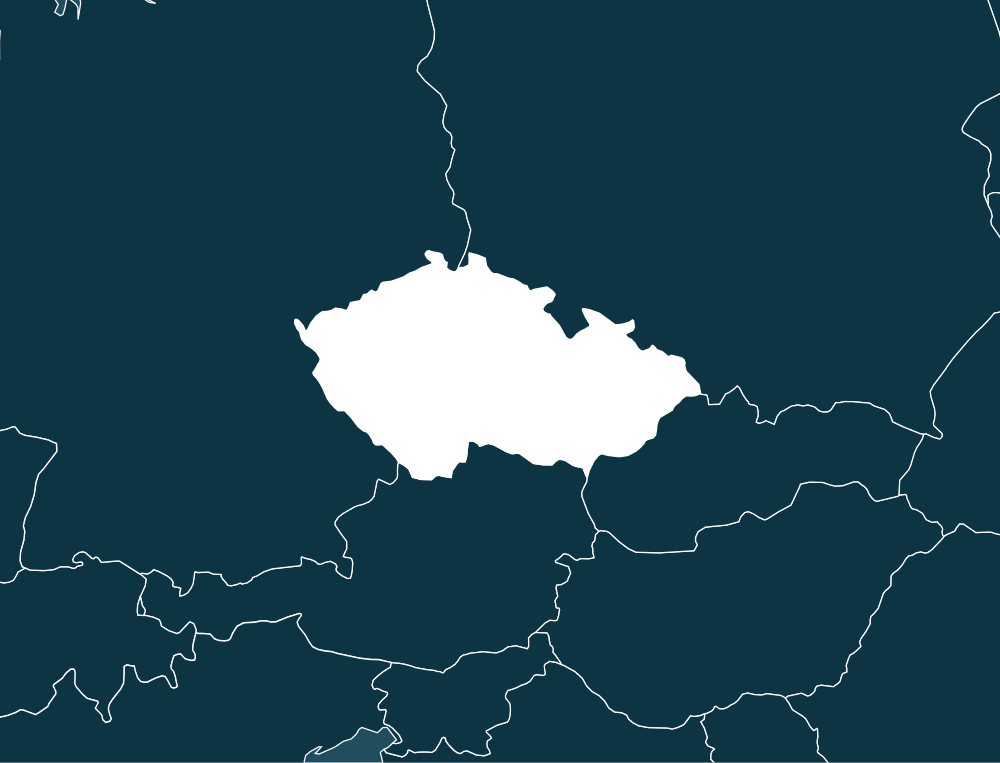
The country’s setting between Germany, Poland, Austria, and Slovakia places it alongside neighbors facing varied combinations of political, security, and sanctions-related pressures. Germany and Poland are addressing heightened security concerns and potential sanctions circumvention, while Austria remains comparatively stable and Slovakia faces rule-of-law tensions affecting its relationship with the EU. Specific concerns range from third-country re-exports and Russia’s “shadow fleet” to alleged indirect supplies and the dismantling of anti-corruption institutions.
AML & Terrorist Financing
The Czech Republic is not subject to FATF enhanced listing, yet MONEYVAL’s 2022 follow-up indicates a framework that is broadly compliant while retaining important effectiveness and implementation gaps. Key exposure areas include tax and corruption proceeds, foreign financial flows, real estate, complex ownership structures, gaming, virtual assets, and trade-based laundering, with the FAU, CNB, and Czech law enforcement continuing to develop their responses. Terrorist-financing risks are considered moderate but credible, while delays in targeted sanctions, uneven understanding among obliged entities, incomplete beneficial-ownership information, limited DNFBP reporting, and the need for more complex money-laundering prosecutions leave several issues worth closer examination.
Sanctions
The Czech Republic applies UN and EU restrictive measures through its domestic framework, including asset freezes, travel bans, sectoral trade and financial restrictions, and arms embargoes directed at specified governments, entities, and individuals. These measures encompass regimes addressing situations such as Syria, Iran, Russia, Ukraine, Venezuela, Libya, and North Korea, with enforcement involving Czech institutions such as the Financial Analytical Office. No international sanctions are currently in force against the Czech Republic, although concerns surrounding transit routes, beneficial-ownership opacity, and Russian-linked sanctions evasion have prompted legislative and enforcement reforms.
Criminality
The Czech Republic faces a varied crime landscape involving drug production and distribution, human trafficking, illegal wildlife trade, cyberattacks, and money laundering through businesses, casinos, and real estate, with both domestic networks and foreign criminal actors involved. Corruption controls include asset declarations, contract and beneficial-ownership registers, whistleblower protections, and investigations by the National Center for Organized Crime, although lengthy proceedings, procedural hurdles, enforcement gaps, and limited protection for anonymous whistleblowers remain concerns.
Reports
Czechia remains on Tier 1, with the Ministry of Interior’s Program of Support and Protection of Victims of Trafficking and cooperation with NGOs supporting victims, while police and labor inspectors intensified investigations into labor exploitation and fraudulent recruitment. At the same time, labor trafficking is identified as increasingly prevalent across sectors such as construction, agriculture, manufacturing, and domestic work, with online recruitment, “pseudo-agencies,” Ukrainian refugees, children, Roma communities, and other vulnerable groups facing particular risks.
Industry/Product Sector Risk
Czech Republic’s AML/CFT risk landscape is shaped by significant exposure in retail banking, real estate, gambling, money remittance, legal services and company-service activity, alongside persistent cash, trade-based and cross-border laundering channels. The national risk assessment points to corruption, tax and subsidy fraud, organised crime, cyber-enabled fraud and procurement-related offences as recurring drivers, with virtual currencies and non-profit organisations adding evolving areas of concern. Supervision and guidance from bodies such as the Czech National Bank and the FIU provide important context for understanding how these vulnerabilities are identified across financial institutions, DNFBPs and selected wider economic sectors.
Economy & Investment Climate
Czechia is a highly open, export-oriented economy rooted in automotive and engineering, with slow recent growth, easing inflation, exceptionally low unemployment, and strong commercial ties to Germany and the wider EU. Its investment environment combines EU-aligned institutions, expanding R&D and technology incentives administered with support from CzechInvest and the Ministry of Industry and Trade, and generally reliable financial and legal systems, while skilled-labor shortages, energy costs, demographic aging, and dependence on manufacturing remain important considerations.
Cryptocurrency Regulations
Cryptocurrency is permitted in the Czech Republic as an asset rather than legal tender, within a developing framework shaped by AMLD4, AMLD5, MiCA, and oversight from the Financial Analytical Office, Czech National Bank, and Trade Licensing Office. Exchanges and wallet providers face registration, KYC, Travel Rule, recordkeeping, and tax obligations, while forthcoming CARF commitments and evolving token, ICO, and consumer-protection rules suggest further changes ahead.
Get full access
The information on this page is a brief summary. Get access to EDD country reports, all risk category scores and customisable weightings for 245 jurisdictions.