
Risk Indicators
- FATF/EU Blacklist/Greylist (Lower Concern)
- Terrorism Financing (Lower Concern)
- US Dept of State INCSR
- Proliferation Financing
- Corruption
- Criminality
- Resilience & Governance
- Financial Transparency
- Offshore Finance Centres
- Sanctions
Background
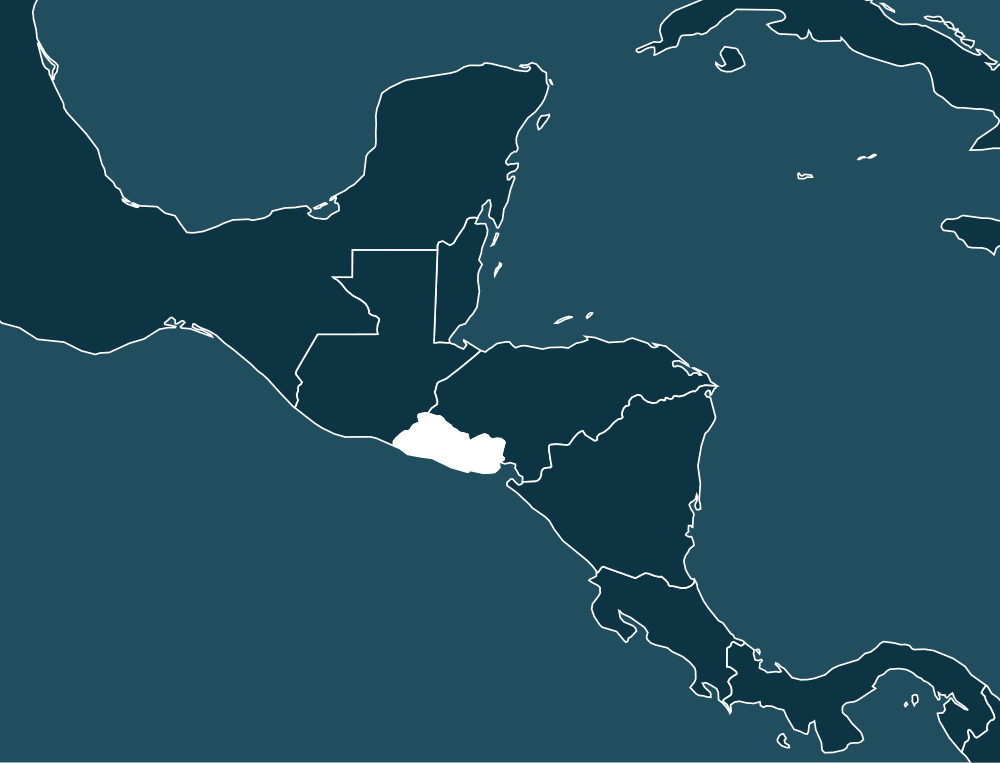
El Salvador’s modern history includes independence from Spain in 1821, separation from the Central American Federation in 1839, and a 12-year civil war that ended with military and political reforms in 1992. The conflict left approximately 75,000 people dead, while persistent gang activity and one of the world’s highest homicide rates continue to shape the country’s security environment. Its regional position places it alongside neighboring states whose political and financial vulnerabilities carry broader implications.
Guatemala has faced post-election democratic pressures, corruption, threats to judicial independence, and sanctions from the European Union and United Kingdom against figures linked to the Public Prosecutor’s Office. Honduras combines entrenched corruption, organized crime, severe violence, and allegations involving the family of former President Juan Orlando Hernandez, alongside targeted United States sanctions. Weak enforcement and illicit financial flows in both countries—including money laundering through professional and real-estate channels—add further complexity to El Salvador’s immediate neighborhood.
AML & Terrorist Financing
El Salvador has strengthened its AML/CFT framework through the National Risk Assessment, CIPLAFT, and reforms involving the FIU and digital assets, but significant vulnerabilities remain in its dollarized, cash-based economy and exposure to organized crime, drug trafficking, corruption, and cross-border illicit activity. The FIU and Attorney General’s Office have improved intelligence, investigations, and asset forfeiture, yet limited staffing, uneven reporting by DNFBPs, weaknesses in beneficial ownership information, and restricted supervisory and sanctioning powers continue to affect implementation. Terrorist financing is primarily associated with gangs and domestic organized crime, while understanding and prioritization of broader TF risks—including virtual assets—remain limited despite strengthened targeted financial sanctions and list-screening mechanisms.
Sanctions
El Salvador is required to implement United Nations Security Council sanctions, but there is no indication that it currently enforces independent sanctions against other nations. No international sanctions are presently in force against El Salvador as a state, although U.S. measures have targeted former presidents Mauricio Funes and Salvador Sánchez Cerén, along with other officials, judges, and bankers linked to corruption, money laundering, or democratic abuses. President Nayib Bukele and his current government have not been officially sanctioned, while proposed U.S. legislation could broaden restrictions to him and senior officials, amid scrutiny involving Bitcoin oversight, regional transit routes, and alleged political collusion.
Criminality
Crime and corruption remain significant concerns in El Salvador, with powerful gangs involved in extortion, trafficking, drug distribution, and other illicit markets, while cyber and financial crimes continue to affect businesses and public institutions. Although the Fiscalía General de la República prosecutes credible corruption allegations and a new Anti-Corruption Law establishes stronger disclosure and oversight mechanisms, questions persist about enforcement, public procurement transparency, and the handling of alleged misuse of public funds.
Reports
El Salvador is portrayed as a forceful maritime counter-narcotics partner, with the PNC’s DAN, the Salvadoran Navy, and STORM recording major offshore cocaine seizures while expanding chemical-diversion oversight, prevention efforts, and cooperation through entities such as CITE, GCIF, and ILEA. Trafficking risks remain substantial despite reduced gang control in many communities, with children, migrants, and economically vulnerable people exposed to sexual exploitation and forced labor, while authorities increased prosecutions and shelter assistance but continued to face gaps in victim identification, investigations, and official accountability.
Industry/Product Sector Risk
El Salvador’s industry landscape presents a varied AML/CFT risk profile, with particular pressure points in cash-intensive businesses, real estate, remittances, virtual assets, transportation, construction and politically exposed activity. While the financial system supervisor and FIU support more developed controls in banking and related sectors, oversight gaps among DNFBPs, uneven beneficial-ownership practices and expanding digital channels leave important vulnerabilities. The NRA and Mutual Evaluation material point to exposure from corruption, extortion, drug trafficking, smuggling, fraud, tax offences and environmental crime—details that warrant closer examination across specific industries and supervisory frameworks.
Economy & Investment Climate
El Salvador presents an increasingly investment-oriented economy, supported by dollarization, CAFTA-DR access, sharply improved security, expanding tourism, and reforms involving the IMF, while agencies such as INVEST and the National Trade Facilitation Committee promote opportunities in technology, manufacturing, logistics, and tourism. At the same time, substantial informality, skills and infrastructure gaps, uneven regulatory implementation, modest FDI inflows, and reliance on U.S.-linked remittances leave important questions for investors navigating the country’s evolving business climate.
Cryptocurrency Regulations
El Salvador’s cryptocurrency framework is anchored by Bitcoin’s legal-tender status and expanded through the Digital Assets Issuance Law, with the Central Reserve Bank and National Commission for Digital Assets overseeing distinct provider and issuance activities. AML/KYC obligations, FIU reporting requirements, tokenization rules, and a notably favorable tax treatment coexist with still-developing supervision, including limited publicly disclosed licensing and enforcement activity.
Get full access
The information on this page is a brief summary. Get access to EDD country reports, all risk category scores and customisable weightings for 245 jurisdictions.