
Risk Indicators
- FATF/EU Blacklist/Greylist (Lower Concern)
- Terrorism Financing (Medium Concern)
- US Dept of State INCSR
- Proliferation Financing
- Corruption
- Criminality
- Resilience & Governance
- Financial Transparency
- Offshore Finance Centres
- Sanctions
Background
Eswatini’s modern identity reflects a Swazi kingdom shaped by 19th-century rule under MSWATI II, colonial-era borders, and independence from British administration in 1968. Although the 2005 constitution provided for a more independent parliament and judiciary, political parties remain in an uncertain legal position within a system still widely regarded as an absolute monarchy. The 2018 renaming by King MSWATI III, the suppression of 2021 prodemocracy protests, and the appointment of a new prime minister after the peaceful 2023 elections point to a country balancing tradition, reform, and unresolved political tensions.
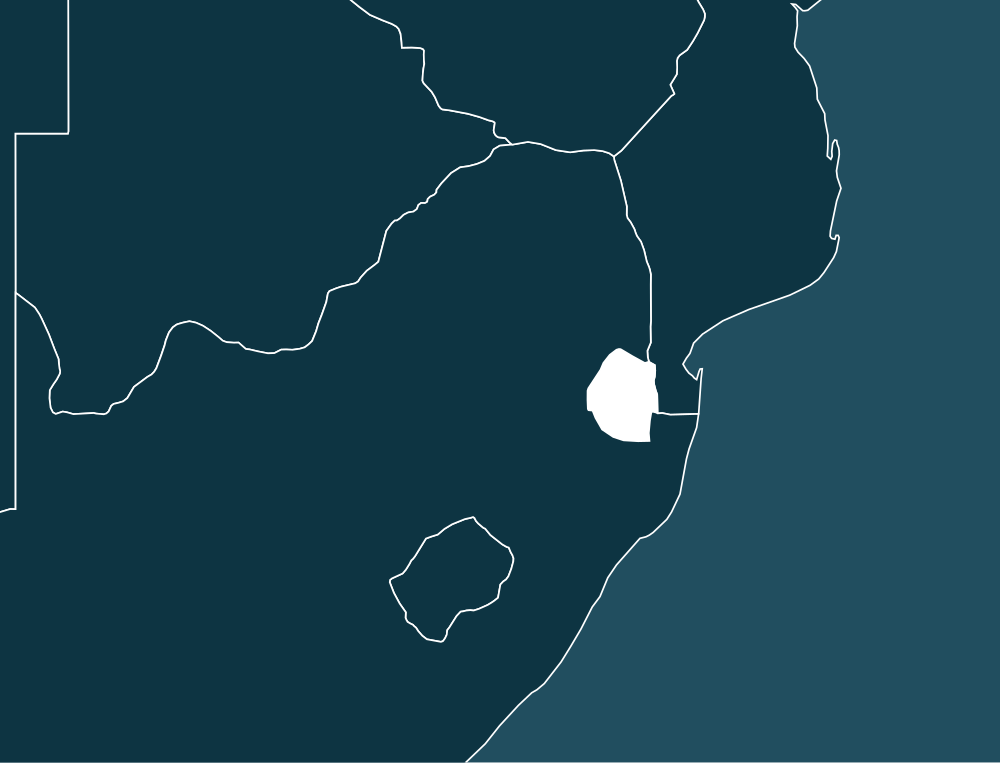
As a lower-middle income country, Eswatini continues to face severe poverty, corruption, unemployment, and the world’s highest HIV/AIDS prevalence rate, despite declines in new infections. Its position between South Africa and Mozambique places it alongside neighbors affected by crime, inequality, political unrest, insurgency, regulatory weaknesses, and scrutiny over illicit financial flows. Regional concerns range from proposed measures under the US-South Africa Bilateral Relations Review Act of 2025 to documented AML/CTF breaches in Mozambique, while Eswatini’s recognition of Taiwan adds a distinctive dimension to its external relationships.
AML & Terrorist Financing
Eswatini is not currently identified by FATF as having strategic AML deficiencies, yet its 2022 assessment points to limited risk understanding, uneven compliance, and resource constraints across the system. Challenges include beneficial ownership transparency, infrequent risk-based supervision by the CBE and FSRA, limited use of EFIU intelligence in money-laundering investigations, and weak capacity to pursue complex financial crime and confiscation. Terrorist-financing and proliferation-financing controls remain particularly underdeveloped, with no successful TF prosecutions, delayed targeted sanctions, limited oversight of higher-risk NPOs, and gaps affecting agencies such as the REPS, DPP, and EFIU.
Sanctions
Eswatini is obliged, as a UN member, to support Security Council sanctions, but no international sanctions are currently in force against the kingdom and no independent sanctions imposed by Eswatini are identified. Its name has instead arisen in connection with alleged maritime sanctions-evasion networks involving Iranian and Russian oil, including vessels using registrations the International Maritime Organization described as “false Eswatini.” The government has sought to remove its flag from unauthorised vessels, while the UAE has restricted Eswatini-flagged ships and the International Chamber of Shipping has identified the flag as a sanctions-evasion risk.
Criminality
Eswatini faces persistent corruption and a broad range of criminal activity, including bribery in public services and procurement, financial fraud, illicit drug markets, counterfeit trade, trafficking, cybercrime, and poaching of rare cycads. Although the Prevention of Corruption Act, Public Procurement Act, and Anti-Corruption Commission provide formal safeguards, enforcement has been inconsistent, with reported influence over contracts, appointments, recruitment, and service delivery, while the Eswatini Public Procurement Regulatory Agency’s safeguards are not effectively enforced.
Reports
Eswatini remains a Tier 2 country, with increased trafficking investigations, victim identification, and frontline training, though prosecutions and convictions remained absent and a key Protection Officer post in the Prevention of People Trafficking and Smuggling Secretariat was vacant. Vulnerabilities span online child exploitation, domestic servitude, sex trafficking, agricultural and other forced labor, with Emaswati and Mozambican migrants affected domestically, abroad, and along routes to South Africa.
Industry/Product Sector Risk
Eswatini’s financial and non-financial sectors present a varied risk landscape, with retail banking, real estate, legal services, money remitters, foreign exchange and cash-intensive businesses featuring prominently alongside emerging exposure through mobile money and virtual assets. Oversight is distributed among bodies including the Central Bank of Eswatini, the Financial Services Regulatory Authority, the Eswatini Gaming Board, the Law Society of Eswatini and the Eswatini Institute of Accountants, although supervisory maturity and beneficial-ownership controls differ considerably across sectors. Beyond finance, vulnerabilities are closely linked to cross-border trade, porous borders, informal commerce, agriculture, construction, public procurement and transportation, with corruption, tax evasion, fraud, smuggling and drug trafficking recurring as significant sources of illicit proceeds.
Economy & Investment Climate
Eswatini is pursuing a more export-oriented future through SADC, COMESA, SACU, AfCFTA, AGOA, and initiatives led by the Eswatini Investment Promotion Authority, with potential in manufacturing, renewable energy, ICT, sugar, forestry, textiles, and apparel. At the same time, high unemployment, skills mismatches, state-enterprise dominance, infrastructure dependence, land-tenure complexity, and an unsettled political environment create a business landscape where opportunity is closely linked to the pace of reform and the effectiveness of institutions such as EIPA, ESEPARC, ESERA, and the Central Bank of Eswatini.
Cryptocurrency Regulations
Cryptocurrency in Eswatini occupies an uncertain space: it is not legal tender, yet it is not expressly banned, with the Central Bank of Eswatini and FSRA observing a market that lacks dedicated licensing, exchange oversight, tax treatment, and clear token classifications. The EFIU’s AML role and ESEPARC’s baseline survey point toward emerging policy considerations, while the absence of a compliance registry, Travel Rule application, and formal VASP supervision leaves consumers and investors navigating substantial unanswered questions.
Get full access
The information on this page is a brief summary. Get access to EDD country reports, all risk category scores and customisable weightings for 245 jurisdictions.