
Risk Indicators
- FATF/EU Blacklist/Greylist (Higher Concern)
- Terrorism Financing (Lower Concern)
- US Dept of State INCSR
- Proliferation Financing
- Corruption
- Criminality
- Resilience & Governance
- Financial Transparency
- Offshore Finance Centres
- Sanctions
Background
Namibia’s modern identity emerged from a long and complex transition shaped by German colonization, South African administration, and a UN-backed independence process. SWAPO’s liberation struggle and subsequent political dominance remain central to the country’s history, even as its ideology and electoral fortunes have evolved. The presidencies of Hifikepunye Pohamba and Hage Geingob mark important shifts in Namibia’s recent political landscape.
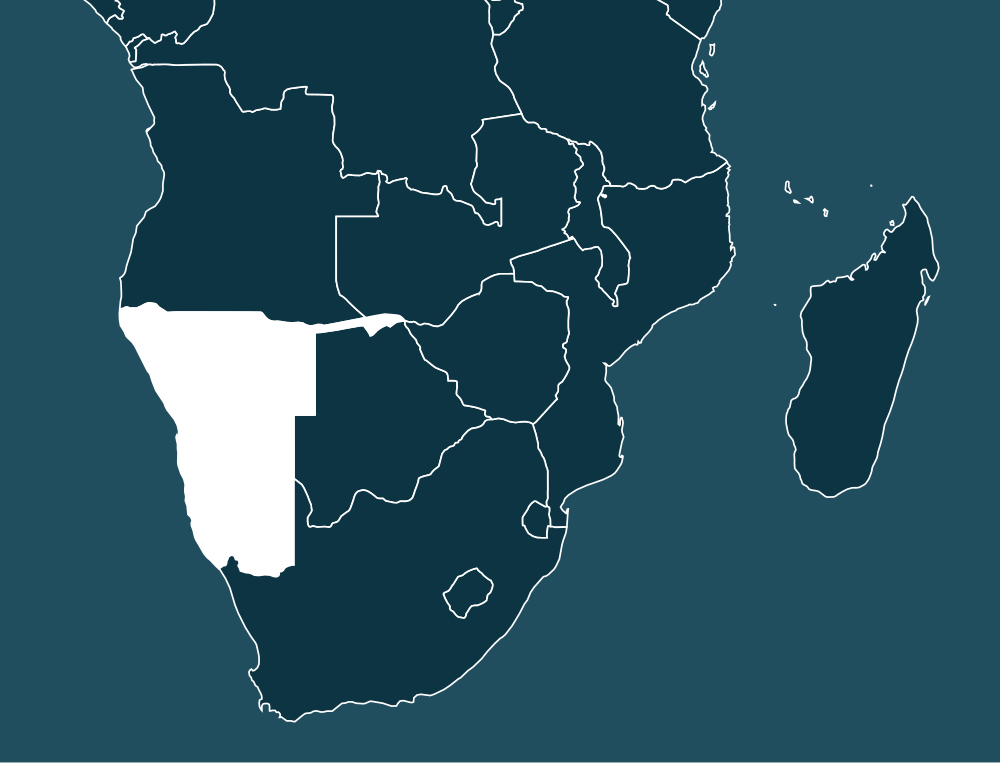
Bordering Angola, Botswana, South Africa, and Zambia, Namibia navigates a regional environment influenced by past conflict, border crime, economic interdependence, and political uncertainty. Cooperation through initiatives such as the 2023 Civil-Military Cooperation Plan and emerging G7-linked diamond verification efforts highlights its role in regional security and sanction enforcement. At the same time, disputes involving US trade measures, visa restrictions, resource sovereignty, and Namibia’s outspoken support for Cuba reveal a foreign policy balancing international pressure with regional and ideological commitments.
AML & Terrorist Financing
Namibia has made significant AML/CFT progress and is no longer subject to FATF strategic-deficiency listing, although it was added to the European Commission’s high-risk jurisdiction list in August 2025 and remains under enhanced follow-up with ESAAMLG. Key vulnerabilities include proceeds linked to fraud, corruption, tax and wildlife crimes, outward movement of illicit funds, emerging risk-based supervision, uneven beneficial-ownership compliance, and limited use of financial intelligence beyond predicate-offence investigations. Terrorist-financing and proliferation-financing controls remain less mature, with concerns around targeted financial sanctions, NPO risk assessment, institutional capacity, and the practical coordination of bodies such as the FIC, NAMFISA, NISS, law-enforcement agencies, and the Office of the Prosecutor-General.
Sanctions
Namibia implements United Nations Security Council sanctions, including measures involving arms, travel, finance, commodities, and other restrictions, but it currently imposes no separately identified sanctions on other nations in the available material. There are no international sanctions currently in force against Namibia, although United Nations Panel of Experts reporting from 2015–2017 linked Walvis Bay, North Korean firms such as Mansudae Overseas Projects and KOMID, and alleged uranium-transfer networks to past sanctions-evasion concerns. Following scrutiny, Namibia ended the relevant contracts, auctioned associated assets, and repatriated 242 North Korean nationals in 2017, while ongoing attention remains focused on trade routes, financial transparency, and regional transit risks.
Criminality
Namibia has formal anti-corruption mechanisms, including the Anti-Corruption Commission, Ombudsman’s Office, and Office of the Attorney General, but implementation remains constrained and public concern about graft is substantial, with Afrobarometer finding that many citizens see corruption worsening and fear retaliation for speaking out. Criminal activity spans human trafficking, counterfeit and excise-goods smuggling, wildlife and mineral crimes, drug trans-shipment, cyberattacks, and growing financial fraud, involving both established domestic networks and foreign-linked actors.
Reports
Namibia remains on Tier 2 as authorities expand funding, training, international cooperation, and online child-safety efforts, while gaps persist in victim screening, referrals, and publicly documented investigations or prosecutions. Trafficking risks affect children, foreign workers, fishers, refugees at Osire, and people recruited through deceptive social-media job offers, with food insecurity, youth unemployment, and cross-border movement intensifying vulnerabilities across sectors ranging from domestic service and farming to fishing and online exploitation.
Industry/Product Sector Risk
Namibia’s financial and professional sectors show a varied risk landscape, with the FIC, NAMFISA, the Casino Board, and other supervisory bodies overseeing activities ranging from banking and investment management to real estate, remittances, and legal services. Higher exposures are associated with cash-intensive businesses, cross-border trade, opaque ownership structures, virtual currencies, and politically connected transactions, with corruption, fraud, tax offences, wildlife and environmental crimes recurring as key concerns. Developments surrounding Fishrot, fisheries, transport, construction, mining, agriculture, tourism, and nonprofit activity point to a wider network of vulnerabilities that extends well beyond traditional financial institutions.
Economy & Investment Climate
Namibia presents a generally stable and investment-friendly economy, with services and industry—particularly mining, tourism, fishing, logistics, and emerging oil, renewable energy, and green hydrogen opportunities—supported by the Namibia Investment Promotion and Development Board and the Ministry of International Relations and Trade. Its independent courts, developed banking system, regional market access, and investment protections are balanced by a small domestic market, high transport and energy costs, skills shortages, inequality, and the continuing influence of state-owned enterprises and local participation priorities.
Cryptocurrency Regulations
Namibia has moved from uncertainty toward structured oversight of cryptocurrencies through the Namibia Virtual Assets Act 2023, while the Bank of Namibia and Financial Intelligence Centre impose licensing, registration, AML/CTF, and transaction-monitoring expectations on service providers. Digital assets are not legal tender, but emerging licensed activity—including provisional approvals for Mindex Virtual Asset Exchange and Landifa Bitcoin Trade—exists alongside evolving rules on taxation, ICOs, and investor transparency.
Get full access
The information on this page is a brief summary. Get access to EDD country reports, all risk category scores and customisable weightings for 245 jurisdictions.