
Risk Indicators
- FATF/EU Blacklist/Greylist (Lower Concern)
- Terrorism Financing (Lower Concern)
- US Dept of State INCSR
- Proliferation Financing
- Corruption
- Criminality
- Resilience & Governance
- Financial Transparency
- Offshore Finance Centres
- Sanctions
Background
Saint Lucia’s history was shaped by prolonged rivalry between England and France, particularly over Castries’ natural harbor and the island’s growing sugar industry, before its eventual cession to the United Kingdom in 1814. Following the abolition of plantation slavery, the island retained an agricultural and tropical commodity-based economy. Its constitutional path moved through the West Indies Federation and Associated States arrangements before full independence in 1979.
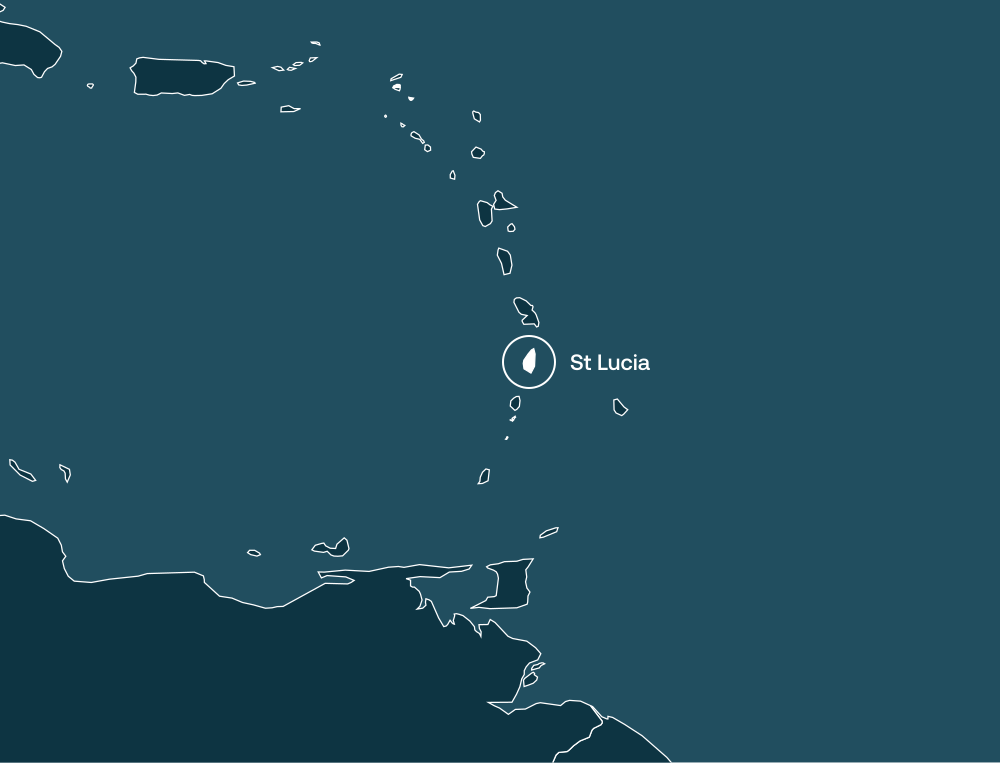
Today, Saint Lucia sits within a Caribbean environment marked by maritime trafficking, gang violence, financial crime concerns, and the wider effects of Venezuela-related sanctions. Connections with St. Vincent and the Grenadines, Barbados, Martinique, and Grenada bring overlapping questions involving illicit flows, anti-money-laundering vulnerabilities, geopolitical relationships, and cross-border enforcement. Regional scrutiny also surrounds citizenship-by-investment arrangements and the strategic position of Caribbean states between South American production zones and North American and European markets.
AML & Terrorist Financing
Saint Lucia is not listed by FATF as having strategic AML deficiencies, yet it remains in enhanced follow-up amid uneven technical compliance and limited demonstrated effectiveness. The Financial Intelligence Authority, NAMLOC, and other authorities face resource, supervisory, coordination, and beneficial-ownership challenges, while risks linked to narcotics trafficking, fraud, cash movement, offshore structures, real estate, and the citizenship-by-investment programme remain significant. Terrorist-financing and proliferation-financing controls appear especially underdeveloped, including gaps in national strategy, NPO oversight, UNSCR implementation, international cooperation, and the identification and investigation of related threats.
Sanctions
Saint Lucia is required to implement United Nations Security Council sanctions, including measures covering designated individuals and entities on the Consolidated List, while no international sanctions are currently in force against the country. Its Citizenship by Investment Program has nevertheless been linked to alleged evasion of U.S. sanctions targeting Russia, including continued passport processing and a reported $200,000 payment routed through BNY Mellon despite a stated 2022 halt. Allegations involving figures such as Deputy Prime Minister Ernest Hilaire and lawyer Thaddeus Antoine have prompted concerns about possible U.S. Treasury action and travel restrictions, although Saint Lucia’s yellow-list designation did not lead to restrictions being imposed.
Criminality
Saint Lucia faces persistent concerns involving cocaine transit, cannabis, human trafficking, firearms, financial fraud, and money laundering, with local gangs active in areas including Castries, Gros Islet, and Vieux Fort and indications that some officials may facilitate criminal operations. Although the Integrity in Public Life Act and agencies such as the Royal Saint Lucia Police Force, Integrity Commission, Director of Public Prosecutions, and Financial Intelligence Unit provide an anti-corruption framework, limited prosecutions, inadequate transparency, and vulnerabilities linked to offshore finance and citizenship-by-investment schemes remain notable concerns.
Reports
Saint Lucia participates in a broader Eastern Caribbean counternarcotics effort involving the Regional Security System, CARICOM IMPACS, maritime intelligence, and U.S.-supported judicial and enforcement initiatives, though resource constraints, corruption risks, and limited treatment capacity remain important concerns. In human trafficking matters, awareness campaigns and the 2023–2026 National Action Plan coexist with a Tier 2 Watch List designation, no identified victims or new investigations, and allegations involving vulnerable children, commercial sex settings, migrant workers, and Cuban-affiliated personnel.
Industry/Product Sector Risk
Saint Lucia’s financial and business landscape presents a varied risk profile, shaped by a cash-intensive economy, substantial cross-border activity, and the country’s role as a tourism and transit hub. Higher-risk areas include international insurance, private mutual funds, wealth management, legal services, real estate, money remitters, and transport channels, while the FIA and ECCB face ongoing challenges in supervision, beneficial ownership transparency, and effective testing of AML/CFT controls. The underlying exposure spans drug trafficking, fraud, tax crimes, corruption, human trafficking, migrant smuggling, and cash smuggling, with further detail emerging across casinos, offshore structures, politically exposed persons, and other gatekeeper sectors.
Economy & Investment Climate
Saint Lucia’s economy is service-led and tourism-centered, with additional activity in real estate, manufacturing, infrastructure, and global business outsourcing, while growth remains exposed to natural disasters, supply-chain disruptions, and global downturns. The government continues to promote an open investment environment through Invest Saint Lucia, regional financial integration via the ECCB, and a broad range of sector-specific concessions, although investors must navigate licensing, regulatory, and infrastructure considerations.
Cryptocurrency Regulations
Saint Lucia permits cryptocurrency activity under the Virtual Asset Business Act No. 24 of 2022, with the Financial Services Regulatory Authority overseeing licensing, AML controls, Travel Rule obligations, and token-related offerings, while crypto itself remains outside the country’s legal-tender framework. The environment combines general tax principles with detailed compliance expectations, yet the FSRA’s notices and current absence of registered VASPs suggest a market still taking shape under a relatively new supervisory regime.
Get full access
The information on this page is a brief summary. Get access to EDD country reports, all risk category scores and customisable weightings for 245 jurisdictions.