
Risk Indicators
- FATF/EU Blacklist/Greylist (Lower Concern)
- Terrorism Financing (Medium Concern)
- US Dept of State INCSR
- Proliferation Financing
- Corruption
- Criminality
- Resilience & Governance
- Financial Transparency
- Offshore Finance Centres
- Sanctions
Background
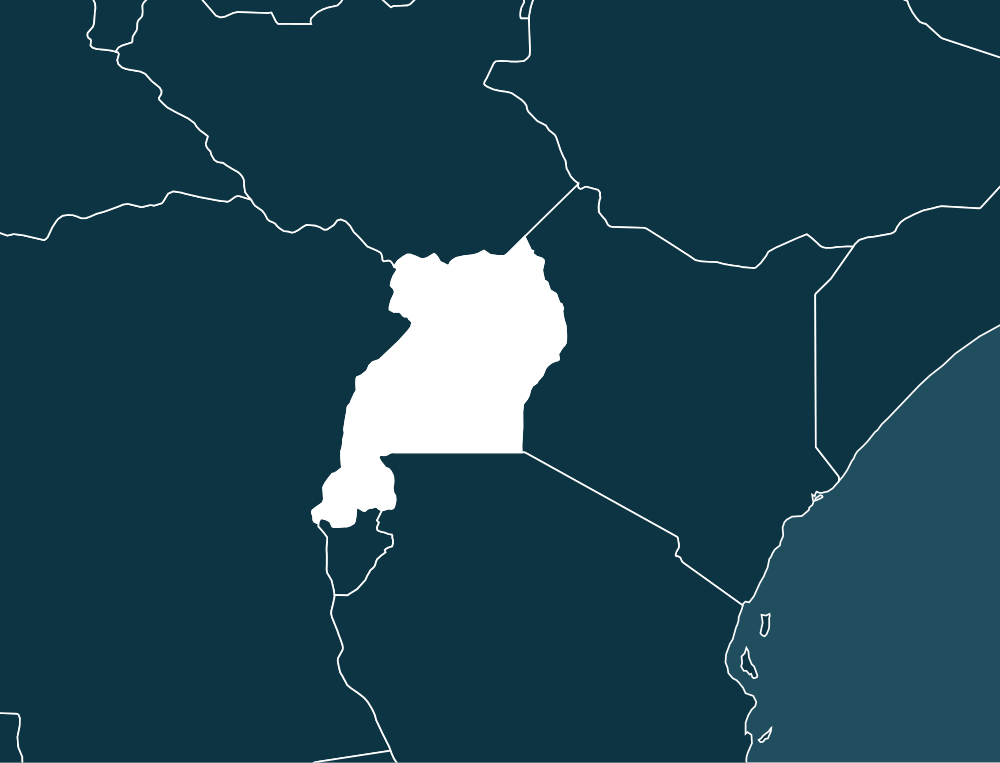
Uganda emerged from a complex history of migration, centralized kingdoms, colonial boundary-making, and differing systems of British administration across its regions. After independence in 1962, political upheaval, military coups, mass atrocities, and prolonged insurgencies reshaped the country before Yoweri Museveni’s rise in 1986 brought relative stability and economic growth. The removal of presidential age limits in 2017 further underscored the durability of Museveni’s rule and the unresolved tensions surrounding Uganda’s political direction.
Today, Uganda’s security posture is closely tied to developments in the Democratic Republic of the Congo, Rwanda, South Sudan, and Tanzania, combining joint operations, regional rivalry, border concerns, and contested military interventions. Operation Shujaa, the Allied Democratic Forces, CODECO, M23, the Kagera dispute, and alleged violations of the South Sudan arms embargo point to a regional role that extends well beyond conventional peacekeeping. Scrutiny from the United Nations, the United States, and the European Union intersects with Uganda’s expanding partnerships with China and Russia, creating a complicated landscape of sanctions pressure, economic interests, and strategic maneuvering.
AML & Terrorist Financing
Uganda has made notable AML/CFT progress, including adopting a national strategy, strengthening beneficial ownership arrangements through the URSB, and exiting FATF increased monitoring in February 2024, while remaining engaged with ESAAMLG. Significant risks nevertheless persist around the country’s cash-based informal economy, corruption, cross-border trade, mobile money, real estate, and the capacity of smaller financial institutions and DNFBPs to apply risk-based controls. The FIA, Bank of Uganda, DPP, CID, and other authorities now operate within a more developed framework, but continuing follow-up highlights unresolved challenges involving terrorist-financing investigations, NPO oversight, proliferation-financing sanctions, asset tracing, and effective enforcement.
Sanctions
Uganda is expected to implement United Nations Security Council measures, including restrictions reflected on the Consolidated List, but no specific Ugandan sanctions imposed on other nations are identified. No international sanctions are currently in force against Uganda itself. Nevertheless, Uganda-linked sanctions activity includes the U.S. designation of African Gold Refinery in 2022 and the EU’s action against its former director and beneficial owner, Alain Goetz, amid concerns involving DRC conflict gold, arms transit, and illicit financial channels.
Criminality
Uganda has a broad formal framework for addressing corruption, including the Inspectorate of Government and the Public Procurement and Disposal of Public Assets Authority, yet corruption remains deeply entrenched, particularly in government contracting, with well-connected individuals often avoiding prosecution. The country is also a source, transit point, and destination for trafficking and a regional hub for counterfeit medicines, illicit goods, weapons, wildlife products, drugs, cybercrime, and financial crime, with networks reportedly involving state-linked and foreign actors.
Reports
Uganda remained on Tier 2 as authorities expanded trafficking investigations, launched new district task forces, and supported migrant workers, while gaps in victim services, shelter, and accountability—including continued official complicity—persisted amid exploitation affecting communities from Karamoja to overseas labor corridors. Security forces also disrupted ISIS-DRC/ADF activity, including the capture of alleged IED expert Anwar Al Iraq, while strengthened anti-money-laundering and counter-terrorist-financing measures helped Uganda exit the FATF gray list and no terrorist incidents were recorded in 2024.
Industry/Product Sector Risk
Uganda’s financial and broader commercial landscape presents significant exposure to money laundering and terrorist financing, particularly across cash-intensive activities, mobile money, real estate, gaming, remittances, gold trading, transport, and public procurement. While institutions such as the Bank of Uganda, Capital Markets Authority, Insurance Regulatory Authority, National Lotteries and Gaming Board, and Uganda Registration Services Bureau oversee important parts of the market, supervisory coverage, customer due diligence, beneficial-ownership transparency, and reporting practices remain uneven. The strongest vulnerabilities appear where informal activity, cross-border flows, corruption, smuggling, tax offences, and regional security concerns intersect—though the underlying sector-by-sector detail reveals a far more nuanced risk picture.
Economy & Investment Climate
Uganda’s economy is gaining momentum, with growth returning to pre-pandemic levels as oil and gas preparations, agriculture, industry, and services advance, while the Bank of Uganda reports easing inflation and record foreign direct investment. Its young consumer market, natural resources, free zones, mobile-money activity, and investment incentives offer promise, though investors must weigh corruption, tax pressures from the Uganda Revenue Authority, land and skills constraints, regulatory complexity, and heightened uncertainty ahead of the 2026 elections.
Cryptocurrency Regulations
Uganda permits cryptocurrency activity only within a cautious, fragmented environment: the Financial Intelligence Authority treats Virtual Asset Service Providers as AML “accountable persons,” while the Bank of Uganda does not recognize crypto as a payment instrument or legal tender. With 16 VASPs registered by June 2024 but no dedicated licensing regime, uncertain tax treatment under general laws, and developing positions from the Uganda Revenue Authority and Capital Markets Authority, exchanges, token offerings, and digital-asset businesses face substantial compliance and regulatory ambiguity.
Get full access
The information on this page is a brief summary. Get access to EDD country reports, all risk category scores and customisable weightings for 245 jurisdictions.